 Sweet TnT Magazine Trinidad and Tobago Culture


Related Articles


Experience gifts this Mother’s Day deliver lasting emotional value, deeper connection, and memorable shared moments that material gifts cannot replicate. Modern gifting trends show a decisive shift away from physical items towards curated experiences that prioritise time, presence, and personal enrichment.
Research confirms that experiential gifts create stronger emotional bonds and longer-lasting happiness than traditional presents. This article explains why experience gifts are now dominant, how to choose the right one, and which categories offer the highest emotional return.
It provides a structured framework covering wellness, travel, culinary, creative, and at-home experiences. It also addresses the specific challenge of buying for mothers who already “have everything”, reframing gifting as intentional time investment rather than consumption.
Key Takeaways
- Experience gifts create stronger emotional connections than physical presents.
- Mothers increasingly prefer time, relaxation, and shared activities over objects.
- Wellness, travel, and creative experiences deliver the highest perceived value.
- The best gifts remove effort and decision-making from her day.
- Personalisation and shared participation define a successful experience gift.
The rise of experience gifts this Mother’s Day
The concept of gifting has undergone a structural shift. Historically, Mother’s Day revolved around flowers, jewellery, and restaurant bookings. That model is losing relevance. Consumer behaviour data and cultural trends now indicate a clear preference for experiences that generate memory, meaning, and emotional resonance.
A widely cited study from Cornell University found that experiential gifts produce more enduring happiness than material goods. This is rooted in psychological principles. Experiences are processed as part of identity formation, while physical objects tend to depreciate in emotional value over time. As a result, a shared weekend getaway or a carefully planned day of relaxation often holds greater long-term significance than a high-cost item.
Market data reinforces this behavioural shift. In 2025, spending on Mother’s Day exceeded US$34 billion, with experiential spending categories such as outings and activities growing faster than traditional gift segments. This trend reflects a broader recalibration of priorities. Mothers, particularly those balancing work, family, and caregiving responsibilities, increasingly value time, rest, and meaningful engagement over additional possessions.
Cultural commentary also highlights this transition. Experience gifts are now described as a “new love language” for expressing appreciation, particularly among younger generations who prioritise connection over consumption. The implication is clear. Experience gifts are no longer niche. They are becoming the default.
Why experience gifts work for the mum who has everything
The phrase “has everything” is often misunderstood. It does not imply material abundance alone. It reflects a saturation point where additional objects provide diminishing returns. At this stage, the marginal utility of physical gifts declines sharply.
Experience gifts address this limitation directly. They shift the value proposition from ownership to participation. Instead of adding to clutter, they create moments.
There are three primary mechanisms that explain their effectiveness. The first is emotional amplification. Experiences involve anticipation, participation, and recollection, creating a multi-stage emotional impact. The second is relational bonding. Shared experiences strengthen interpersonal connections through active engagement. The third is narrative value. Experiences become stories that can be revisited and shared, extending their lifespan beyond the event itself.
This is particularly relevant for mothers who prioritise family cohesion and emotional connection. A well-designed experience gift demonstrates thought, planning, and intentionality. It signals that the giver understands her preferences, time constraints, and emotional needs.
In practical terms, this means the gift is not the experience itself. It is the feeling of being seen, valued, and prioritised.
Spa and wellness experiences: Structured restoration
Spa and wellness experiences remain the most consistently preferred category. Their appeal lies in addressing a fundamental gap. Many mothers do not allocate time for self-care.
A full-day spa retreat, massage therapy session, or wellness package provides structured restoration. These experiences are effective because they remove decision fatigue. Everything is arranged in advance, allowing complete disengagement from daily responsibilities.
Modern wellness experiences extend beyond traditional spa services. Float therapy, guided meditation sessions, and holistic treatments are increasingly popular. These offerings focus on both physical recovery and mental recalibration.
The critical success factor is execution. The experience must be seamless. This includes scheduling, transport, and, where relevant, childcare arrangements. The objective is to eliminate friction and ensure that the experience feels effortless.
When executed correctly, wellness experiences deliver high emotional return because they address both physical fatigue and cognitive overload.
Travel and romantic escapes: Shared memory creation
Travel-based experience gifts operate at a higher emotional intensity. They combine novelty, shared time, and environmental change.
Short trips, weekend getaways, and staycations are particularly effective. They provide a break from routine without requiring extensive planning or travel fatigue. For couples, these experiences introduce a romantic dimension that is often absent from daily life.
Survey data indicates that travel is consistently ranked as one of the most desired gifts, with a significant proportion of respondents prioritising romantic and relaxing experiences. This aligns with the broader trend towards experiential consumption.
The key advantage of travel experiences is their narrative depth. They create multi-layered memories involving location, activity, and shared interaction. This makes them highly resilient to emotional decay.
To maximise impact, the experience should be tailored. Consider her preferred environment. Some may value luxury and comfort, while others prefer adventure or cultural exploration.
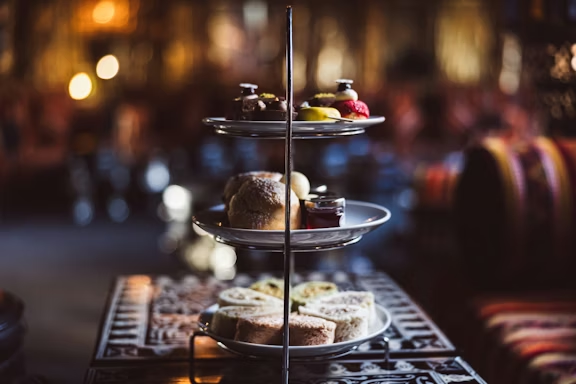
Culinary experiences: Sensory engagement and connection
Food-based experiences offer a versatile and accessible category. They range from high-end dining to interactive cooking classes.
The appeal lies in sensory engagement. Taste, smell, and atmosphere combine to create immersive experiences. Culinary activities also facilitate interaction, making them ideal for shared participation.
Cooking classes, wine tastings, and chef-led workshops provide both entertainment and skill development. They transform passive consumption into active engagement.
For mothers who enjoy food culture, these experiences offer a balance between relaxation and stimulation. They also create transferable value. Skills and recipes learned during the experience can be applied later, extending the benefit beyond the event.
Culinary experiences are particularly effective when personalised. Selecting a cuisine or activity aligned with her interests increases perceived value.
Creative and learning experiences: Personal enrichment
Creative workshops and learning experiences address a different dimension of value. They focus on personal growth and self-expression.
Activities such as art classes, photography workshops, and craft sessions provide an opportunity for creative exploration. These experiences are often described as deeply meaningful because they combine process and outcome.
Participants not only enjoy the activity but also produce a tangible result. This creates a dual-layer benefit. The experience itself is memorable, and the outcome serves as a lasting reminder.
Data suggests that hands-on creative experiences are among the most appreciated categories, particularly for their ability to foster engagement and satisfaction.
Learning-based experiences, such as language classes or skill workshops, extend this concept further. They position the gift as an investment in personal development.
For mothers who value growth and intellectual stimulation, these experiences provide a compelling alternative to traditional gifts.

At-home experience gifts: Controlled intimacy and convenience
Not all experience gifts require external venues. At-home experiences offer a controlled environment with high emotional intimacy.
Examples include curated home spa days, private dining experiences, and structured family activities. The defining feature is intentional design. The experience must be planned and executed with attention to detail.
This category is particularly relevant when logistical constraints limit external options. It also allows for greater personalisation.
One of the most effective approaches is to remove all decision-making from the day. Planning meals, activities, and schedules in advance transforms a typical day into a curated experience.
At-home experiences succeed when they feel distinct from routine. This requires deliberate effort in presentation and execution.
How to choose the right experience gift
Selecting the appropriate experience requires a structured approach. The process can be framed using three criteria.
The first is preference alignment. The experience must reflect her interests, not the giver’s assumptions. This requires observation and, where necessary, indirect enquiry.
The second is logistical feasibility. Consider time availability, location, and physical requirements. An experience that introduces stress or inconvenience undermines its value.
The third is emotional intent. Define the objective of the gift. Whether it is relaxation, connection, or celebration, the experience should align with this intent.
Personalisation enhances effectiveness. Small details, such as including a favourite activity or accommodating specific preferences, significantly increase perceived value.

The economics of experience gifting
From a financial perspective, experience gifts offer efficient value. They reduce the risk of dissatisfaction, returns, or underutilisation.
Traditional gifts often suffer from mismatch. The recipient may not need or want the item, leading to wasted expenditure. Experience gifts mitigate this risk by focusing on engagement rather than ownership.
They also provide flexibility. Many experiences are delivered through vouchers or open scheduling, allowing the recipient to choose the timing.
In an environment where consumers are increasingly conscious of value, experience gifts align with both emotional and economic considerations.
Designing a memorable Mother’s Day experience
The effectiveness of an experience gift is determined by execution. The following elements are critical.
Clarity is essential. The recipient should understand what the experience involves and how it will unfold. Ambiguity reduces anticipation.
Preparation enhances impact. Arranging logistics in advance ensures a seamless experience. This includes bookings, transport, and any supporting elements.
Presentation matters. The way the experience is introduced influences perception. A well-presented invitation or itinerary can elevate the perceived value.
Participation strengthens connection. Whenever appropriate, the giver should be involved in the experience. Shared participation amplifies emotional impact.

The future of Mother’s Day gifting
The trajectory of Mother’s Day gifting is clear. Experience-based gifts are becoming the dominant paradigm.
This shift reflects broader societal changes. As material abundance increases, the relative value of experiences rises. Consumers are prioritising meaning, connection, and memory.
For mothers, this trend is particularly relevant. Their roles often involve prioritising others. Experience gifts reverse this dynamic, placing their needs and preferences at the centre.
The implication for gift-givers is straightforward. The most effective gift is not the most expensive or elaborate. It is the one that creates the most meaningful experience.
Redefining what a gift means
Experience gifts this Mother’s Day represent a fundamental redefinition of gifting. They move beyond objects to focus on time, presence, and emotional connection.
For the mum who has everything, this approach resolves the central challenge of gifting. It eliminates redundancy and introduces relevance.
By prioritising experiences, gift-givers can create moments that endure. These moments become part of personal and family narratives, extending their value far beyond a single day.
In practical terms, the strategy is simple. Identify what brings her joy, remove obstacles, and design an experience that reflects appreciation and understanding.
That is the essence of a meaningful gift.
Recent Articles
- How to choose the right tooth replacement option in St Louis, Missouri
- Contour Airlines flights to Trinidad and Tobago: New nonstop Contour Service connects Trinidad and Dominica
- Back pain: Why sudden pain happens, what it means and when to seek medical care
- How mobile point-of-sale systems can improve retail operations and customer experience
- Planning a New York City, New York food day by neighbourhood, budget, and mood
When you buy something through our retail links, we may earn commission and the retailer may receive certain auditable data for accounting purposes.
 Follow Sweet TnT Magazine on WhatsApp

Every month in 2026 we will be giving away one Amazon eGift Card. To qualify subscribe to our newsletter.
You may also like:
Gift ideas for the mom who loves gourmet food
Better health for moms this Mother’s Day: How Lumen empowers metabolic flexibility and wellness
Why ‘no-gift’ Mother’s Days are becoming a thing (and how to nail it)
The 3-question test to find her perfect gift in under a minute
The hidden meaning behind classic Mother’s Day flowers
The perfect Mother’s Day gift for the tech-savvy, eco-conscious mom
How to make a Mother’s Day video that’ll break the internet
The most overrated Mother’s Day gifts (and what to get instead)
The psychology behind the perfect Mother’s Day surprise
Give mom the gift of perfect health this Mother’s Day
10 Unique ways to celebrate Mom if you can’t be together
The best tech gadgets for moms – she’ll actually use these!
Giving mom the perfect smile in just a few steps
The one thing you should never say to your mom on her special day
The emotional reason moms love handwritten letters (plus templates!)
The best Mother’s Day deals already live – shop before they’re gone!
The 5-second trick to writing a card that’ll make her tear up instantly
The surprising science behind what makes moms truly happy
The lazy person’s guide to an unforgettable Mother’s Day (no effort needed)
Why AI-powered gifts are the future of Mother’s Day (tested & approved)
The best personalised gifts that’ll make her cry (in a good way!)
The ultimate Mother’s Day brunch recipe – so easy, even dads can nail it
Why millennial moms are ditching flowers – and what they want instead
The best subscription boxes for moms – she’ll thank you all year
The #1 mistake people make on Mother’s Day (don’t be that person!)
This heartfelt gesture beats any expensive gift – try it this year
10 DIY gifts so good, she’ll think you hired a pro
The shocking truth about Mother’s Day spending – are you overdoing it?
Why 87% of moms prefer experiences over gifts – and what to book now
Last-minute Mother’s Day gifts that’ll make you look like a genius
The secret gift every mom wants in 2025 (it’s not what you think!)
Treat Mom with the gift of relaxation
The importance of self-care: Practical tips for a healthy mind
New laptop for your modern Mom
Upgrade Mom’s Phone this Mother’s Day
When Mom says she has everything she needs
Gifts for Mom that show you care
The importance of sleep: How to create a restful nighttime routine
The best ways to boost your mood naturally
The benefits of meditation: Finding calm in the chaos
The best spring fragrances to try in 2025
International Women’s Day: Celebrating inspiring women
Cultivating gratitude: Simple practices for a happier life
The best spring skincare routine for all skin types
@sweettntmagazine
Discover more from Sweet TnT Magazine
Subscribe to get the latest posts sent to your email.



You must be logged in to post a comment.