 Sweet TnT Magazine Trinidad and Tobago Culture



Related Articles


Jamaica’s sun-grown cannabis has the potential to become a globally recognised agricultural and scientific product if the country can connect its cultural heritage with rigorous genetics, cultivation science, quality control and international regulation. Jamaica already possesses one of the strongest cannabis identities in the world, built through decades of music, Rastafarian culture, tourism and traditional cultivation.
Its legal cannabis sector, however, has had to confront the difficult transition from reputation to reproducible, regulated products capable of meeting pharmaceutical and export standards. Jamaica’s Cannabis Licensing Authority now regulates cultivation, processing, research, transport and retail, while recent reforms are lowering barriers for traditional growers.
The country also has nationally recognised cannabis cultivation and processing standards and an emerging research ecosystem capable of investigating genetics, chemistry, agronomy and medical applications.
In 2025, Jamaica’s legal cannabis industry was valued at approximately US$63.5 million, demonstrating that a commercial foundation already exists. The strategic opportunity is to make sun-grown cannabis a scientifically measurable Jamaican proposition rather than relying solely on the cultural power of the word “Jamaica”.
Key Takeaways
- Jamaica’s cannabis reputation predates its modern regulated industry.
- Sun-grown cannabis can become a scientific production model, not merely a cultivation method.
- Genetics, terroir, testing and traceability are central to international credibility.
- Jamaica has already established national standards for medical cannabis.
- Traditional growers must remain part of the country’s regulated cannabis future.
From cultural symbol to scientific commodity
Few agricultural products are as closely associated with a country’s global identity as Jamaican cannabis. The association was not created by a modern advertising campaign or a government branding exercise. It developed organically through Jamaica’s history, Rastafarian culture, reggae music, migration, tourism and the international circulation of Jamaican popular culture.
That cultural recognition gives Jamaica an extraordinary commercial advantage, but it also creates a fundamental challenge. Reputation is not the same as product consistency.
A consumer may recognise Jamaican ganja immediately, yet a medical manufacturer, pharmaceutical company, regulator or international distributor requires something considerably more precise. It needs to know the plant’s genetics, cannabinoid and terpene profile, cultivation conditions, contaminants, microbial status, pesticide exposure, post-harvest handling, storage conditions and chain of custody.
That distinction lies at the heart of the opportunity described in the debate surrounding Jamaica’s cannabis industry. The country does not need to manufacture a reputation for cannabis. It already has one. The task is to build the scientific infrastructure capable of demonstrating exactly what makes Jamaican cannabis distinctive.
This is where sun-grown cannabis becomes particularly important.
What sun-grown cannabis actually means
Sun-grown cannabis is cannabis cultivated primarily outdoors under natural sunlight rather than inside controlled-environment facilities using artificial lighting.
The distinction is technologically important. Indoor cultivation allows growers to manipulate temperature, humidity, photoperiod, carbon dioxide concentration, irrigation and light intensity with considerable precision. Outdoor cultivation exposes plants to the natural environment, making sunlight, rainfall, soil characteristics, elevation, wind, temperature variation and seasonal conditions part of the production system.
That does not automatically make sun-grown cannabis better than indoor cannabis. Nor does outdoor cultivation by itself establish superior medicinal properties. Such claims require evidence.
What sun-grown cannabis can provide is a different agricultural model, particularly in countries with favourable climates.
Jamaica’s geographical position gives it access to substantial solar radiation and a tropical growing environment. The island also contains considerable variation in elevation, rainfall, soils and microclimates. Those variables create an opportunity for controlled scientific research into how environmental conditions influence Cannabis sativa L.
The scientific question therefore becomes more interesting than whether Jamaican cannabis is naturally superior.
The question is whether Jamaica can identify, measure and reproduce desirable characteristics associated with particular Jamaican cannabis genetics and growing environments.
That is a research problem, and research problems can be solved through systematic data.

seedsman.com
Free seeds with every order. Buy any cannabis seeds and get up to 6 free seeds in our special Seedsman Freebies Promotion!
Jamaica has already begun building the regulatory foundation
Jamaica’s modern regulated cannabis framework dates principally from the Dangerous Drugs (Amendment) Act 2015, which established the Cannabis Licensing Authority as the institution responsible for regulating the medical, therapeutic and scientific cannabis and hemp industry. The CLA issues licences covering cultivation, processing, transport, retail and research and development, while conducting inspections, audits and enforcement.
This is significant because an internationally credible cannabis industry cannot depend on informal assurances about quality.
Medical cannabis enters a different regulatory environment from an agricultural commodity sold purely on reputation. Once cannabis is intended for medical or scientific use, questions surrounding identity, purity, potency, contaminants, manufacturing controls and traceability become fundamental.
Jamaica has already recognised this requirement.
In 2020, the country became the first Caribbean nation to introduce a dedicated set of cannabis standards covering areas including cultivation, processing and handling, packaging and labelling, water activity, cleaning and disinfection, waste disposal and HACCP systems for cannabis consumable products.
These standards provide an important bridge between traditional agriculture and modern regulated production.
The next stage is making those standards part of a larger scientific system.
The science behind Jamaican cannabis
Cannabis is not a chemically uniform crop. Different genetic backgrounds can produce different cannabinoid concentrations, terpene profiles, flowering characteristics, disease responses and agronomic traits.
Even plants described as belonging to the same cultivar can display variation.
Environmental conditions can also influence the expression of plant characteristics. Temperature, light exposure, water availability, nutrients, soil conditions and other environmental variables interact with plant genetics. The scientific concept is often expressed through the relationship between genotype and phenotype.
For Jamaica, this means that the future of sun-grown cannabis should not be based on the assumption that sunlight itself creates a superior product.
Instead, researchers could investigate the interaction between Jamaican genetics and Jamaican environments.
A serious national research programme could examine cultivars traditionally associated with Jamaica, document their genetic characteristics, evaluate cannabinoid and terpene profiles and investigate how those profiles change across growing environments.
Modern genomics makes this increasingly practical.
Research published in 2021 documented a comprehensive reference genome for the Jamaican Lion cannabis strain, illustrating how genomic analysis can contribute to cultivar identification, breeding, pathogen detection, traceability and more systematic cannabis research.
More recent cannabis research is demonstrating why genetic stability also matters in commercial production. A 2026 study examining micropropagated Cannabis sativa found that genetic and epigenetic variation can occur during tissue-culture propagation and concluded that genetic stability requires monitoring over long cultivation programmes.
For Jamaica, this has major implications.
A national cannabis identity cannot be protected effectively if the genetics underlying that identity are poorly documented.

Original Mixed Berry CBD Gummies 1500mg
- Broad Spectrum CBD – 50mg per serving
- Natural mixed berry flavor
- All-natural ingredients
- Organic, vegan & gluten-free
- ND-THC***
From Jamaican soil to a scientific fingerprint
The concept of terroir is familiar in wine, coffee, cocoa and other agricultural products. It refers broadly to the interaction between environmental conditions and agricultural production that contributes to distinctive characteristics.
Cannabis could eventually be studied through a similarly rigorous framework, although the scientific evidence must determine which environmental variables actually influence commercially relevant characteristics.
Jamaica possesses the ingredients for such research.
Researchers could compare cannabis cultivated under different sunlight regimes, elevations, soil types, rainfall patterns and agricultural systems. Laboratory analysis could then measure cannabinoids, terpenes, moisture, microbial contamination, heavy metals, pesticide residues and other quality parameters.
Over time, this could produce something considerably more valuable than the vague claim that Jamaican cannabis is special.
It could produce a Jamaican cannabis chemical and genetic fingerprint.
That fingerprint could become the foundation for provenance systems, quality assurance, intellectual property strategies and potentially geographical branding.
The distinction is crucial. A reputation says that something is good. A scientific fingerprint provides evidence of what it is.
The economic opportunity is already visible
Jamaica’s legal cannabis sector is no longer merely theoretical.
The Cannabis Licensing Authority reported that the legal industry was valued at approximately US$63.5 million in 2025, compared with US$38.9 million in 2024. The 2025 figure represented substantial growth and placed the sector in the broad economic territory of major non-traditional agricultural exports such as yam and coffee.
Yet the country’s cannabis industry has also experienced structural difficulties.
A 2026 assessment by the Jamaica Observer reported that the export-oriented, cultivation-led industry originally envisaged after decriminalisation had not developed at the scale expected, with some operators shifting away from cultivation towards other parts of the value chain.
That experience provides an important lesson.
Jamaica cannot build a successful cannabis economy simply by legalising cultivation.
The high-value opportunity exists further along the chain, where genetics, analytical testing, processing, pharmaceutical research, branded products, intellectual property, clinical research, education and international distribution generate greater economic value.
Sun-grown cannabis could become the agricultural foundation of that system.

cbdMD Starter Kit
SUPPORT A SENSE OF CALM
ENHANCE EXERCISE RECOVERY
CONTAIN NON-DETECTABLE LEVELS OF THC
MANAGE SIGNS OF DAILY STRESS
COMPLEMENT A HEALTHY WELLNESS ROUTINE
Traditional farmers cannot be left behind
There is another dimension that is particularly important for Jamaica.
The country’s cannabis culture was not created by laboratories or multinational corporations. It was developed by generations of cultivators, many of whom operated outside formal legal structures because cannabis prohibition made conventional agriculture impossible.
A scientific cannabis industry that excludes those communities would risk severing the very cultural and agricultural heritage that gives Jamaica its competitive identity.
Jamaica’s recent regulatory reforms recognise this problem.
In 2026, the Cannabis Licensing Authority launched Medical Cannabis Special Permit Programmes designed to create pathways for traditional ganja growers and community groups to enter the regulated industry. The new framework introduced a Cultivator’s Transitional Special Permit and a Special Community Permit while also addressing operational barriers and costs.
That approach could become one of Jamaica’s most important competitive advantages.
Traditional knowledge and modern science do not have to be opposing systems.
Farmers understand local environments, cultivation practices and plant behaviour through accumulated experience. Scientists can quantify those observations, test hypotheses and establish reproducible standards.
The strongest Jamaican cannabis industry would combine both.
Exporting cannabis requires more than growing good plants
International cannabis trade is complicated by the fact that cannabis remains subject to different national laws and international drug-control obligations.
Jamaica’s own Cannabis Licensing Authority explicitly states that the country’s legal cannabis framework must operate consistently with Jamaica’s international treaty obligations concerning narcotic substances.
Consequently, Jamaican companies cannot treat international exports like ordinary agricultural shipments.
Each destination can impose its own requirements concerning medical authorisation, pharmaceutical standards, import permits, testing, labelling, documentation and controlled substances.
Nevertheless, Jamaica has begun demonstrating that regulated exports are possible.
In January 2026, Jamaican cannabis company Jacana completed a regulated shipment of oil-based cannabis products, vape products and extracts to the Cayman Islands under permits issued by the Jamaican Cannabis Licensing Authority and Cayman authorities. The products were intended for dispensing through pharmacies and hospitals by prescription.
This is precisely the type of development that can transform the concept of Jamaican cannabis from cultural reputation into regulated international commerce.


Science must also protect the consumer
There is a temptation in discussions about cannabis to focus exclusively on its economic potential.
That would be a mistake.
Medical cannabis is ultimately a health product, and health products require evidence.
Scientific research into cannabinoids has produced legitimate findings concerning certain medical applications, but the evidence does not support treating cannabis as a universal medicine. The strength of evidence varies considerably by condition, cannabinoid, formulation and clinical context.
That makes analytical quality especially important.
A patient receiving a regulated cannabis medicine needs reliable information about what is actually contained in the product. THC and CBD concentrations must be measured accurately. Contaminants must be controlled. Batch consistency must be demonstrated. Storage conditions must preserve product quality.
Jamaican industry participants themselves have identified public trust as a major issue. In July 2026, Medicanja executive Andray McKenzie argued that the country’s cannabis industry must demonstrate that medicinal cannabis is a scientifically regulated health product supported by rigorous quality standards.
That is exactly the direction the industry should take.
Why sun-grown cannabis could become Jamaica’s signature
The global cannabis industry has increasingly developed around controlled indoor cultivation because indoor environments make standardisation easier.
Jamaica has an opportunity to offer another proposition.
Rather than attempting to imitate every indoor producer, Jamaica could investigate whether carefully controlled outdoor cultivation can produce distinctive, high-quality cannabis at competitive costs while using the country’s natural solar resource.
The argument should not be that sun-grown cannabis is inherently superior.
The argument should be that Jamaica has an opportunity to scientifically determine whether particular Jamaican genetics, environments and cultivation systems produce commercially valuable characteristics.
If the research demonstrates repeatable advantages, those advantages can become part of the product’s international identity.
The economic consequences could extend well beyond dried flower.
Jamaican genetics could support licensed breeding programmes. Analytical laboratories could become export-service businesses. Universities could expand cannabis research. Farmers could participate in certified supply chains. Processing companies could manufacture extracts and other regulated products. Pharmaceutical researchers could investigate specific cannabinoid formulations. Tourism operators could develop educational agricultural experiences within the boundaries of Jamaican law.
A cannabis industry based on science therefore becomes an ecosystem rather than a commodity market.
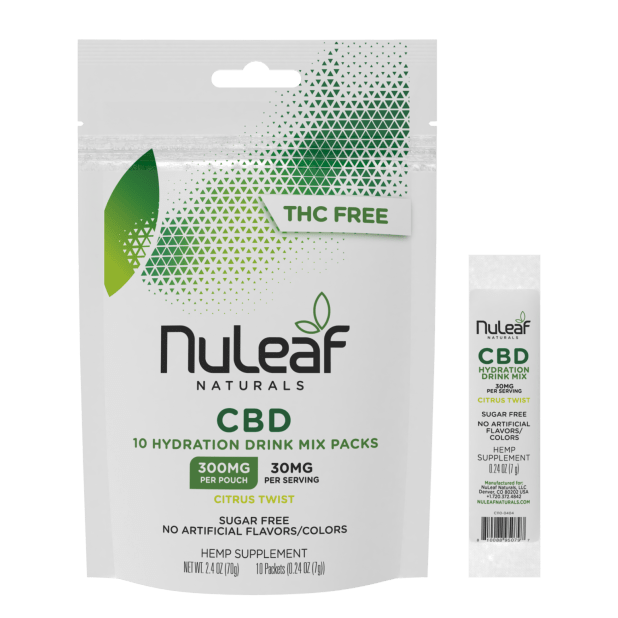
CBD Drink Mix
CBD drink mix is a water-soluble blend of cannabidiol, electrolytes, minerals, and flavorings in a powder form. NuLeaf Naturals’ CBD drink mix contains deep ocean minerals and is designed to hydrate your body quickly, and may also help relieve muscle fatigue due to regular exercise*. Since it’s made from CBD isolate, our organic CBD drink mix is THC-free.
Jamaica’s next cannabis revolution could be scientific
The most important transformation in Jamaican cannabis may not be legalisation itself.
It may be the conversion of traditional knowledge into documented, testable and commercially defensible science.
Jamaica already possesses the cultural recognition that many emerging cannabis markets would spend decades attempting to establish. It has a tropical agricultural environment, an established cultivation tradition, a regulatory authority, national standards and a growing legal market. The country is also creating mechanisms through which traditional farmers can enter the regulated industry.
What remains is to connect those assets.
Sun-grown cannabis can become a particularly powerful part of that strategy because it connects Jamaica’s natural environment with modern agricultural science. But its credibility will ultimately depend on evidence rather than mythology.
The Jamaica brand does not need more mythology.
It needs genetic databases, field trials, analytical laboratories, standardised cultivation protocols, traceability systems, intellectual property protection and scientifically validated claims.
If Jamaica succeeds, the result could be considerably more valuable than the cannabis reputation it inherited from the twentieth century.
It could create a twenty-first-century Jamaican cannabis industry in which the country’s greatest asset is no longer simply that the world knows its name, but that science can explain precisely what the name represents.
That would give sun-grown cannabis something the international market increasingly demands: provenance that can be demonstrated, quality that can be measured and a product identity that can withstand scientific scrutiny.
Source: https://innovationreport.net/article/jamaica-cannabis-science-economy-medical-export/
Recent Articles
- Why did CyberLeek disappear? The GTA 6 leaker and the mystery behind his sudden silence
- Social media creators are earning less: What is really happening to creator pay?
- The enduring stitch: The history of the Singer sewing machine in Trinidad and Tobago
- Warning signs of a stroke: Recognising the symptoms and acting before it is too late
- 30 science-fiction movies that predicted the future more accurately than we expected
When you buy something through our retail links, we may earn commission and the retailer may receive certain auditable data for accounting purposes.
 Follow Sweet TnT Magazine on WhatsApp

Every month in 2026 we will be giving away one Amazon eGift Card. To qualify subscribe to our newsletter.
You may also like:
Why buying weed online is better than buying it locally?
5 Best cannabis dispensaries in Denver
5 Tips for growing cannabis in small batches
Store cannabis in ultimate vacuum-insulated device by Alchemy Jars
How cannabis boosts creativity in users
6 cannabis treats to enjoy in summer
8 ways cannabis can boost your physical performance
How female consumers are reshaping the cannabis wellness industry
Sleep and cannabis: This plant could be your solution to insomnia
Weed gummies sales are slowly catching up with cannabis flower
Understanding the role of delta 9 gummies in stress reduction
How cannabis improves women’s sexual desire, expert insights
Why should you buy weed online from Canada this summer?
Legalisation of weed in Thailand: All you need to know
Can you use weed for stress or burnout at work?
6 Reasons for you to store weed properly
5 Surprising things to know about weed dispensary
How many HHC gummies can I take per day?
Why do fashion icons across the globe prefer using THC gummies?
Do live resin gummies get you higher?
CBD infused gummies: Maintain a healthy body
Weed accessories: 6 popular extras for smokers
Stomach issues: 5 best weed strains that ease gut pain
6 Best Sugar-Free CBD Gummies for You
@sweettntmagazine
Discover more from Sweet TnT Magazine
Subscribe to get the latest posts sent to your email.



You must be logged in to post a comment.