 Sweet TnT Magazine Trinidad and Tobago Culture



Related Articles


Home insurance has become one of the fastest-rising costs of owning a property in high-risk parts of the United States, with Florida, Louisiana, Oklahoma, Texas and other disaster-prone states facing some of the nation’s highest premiums in 2026.
The crisis reflects a combination of increasingly expensive catastrophe losses, higher construction and labour costs, property-value growth, reinsurance expenses, regulatory conditions and insurers reassessing where they are willing to deploy capital. Federal analysis confirms that US homeowners insurance premiums rose nationally between 2019 and 2024, while increases were substantially greater in some disaster-prone regions.
State-level estimates differ considerably because insurers and research organisations use different coverage limits and underwriting assumptions, making direct comparisons more complicated than a single national average suggests.
This article examines where home insurance is most expensive in 2026, why premiums have risen, how climate and catastrophe risk are changing insurance economics, and what homeowners can do to obtain comprehensive protection without paying unnecessarily high premiums.
Key Takeaways
- Florida remains among the most expensive states for home insurance in 2026.
- Severe storms are driving high premiums far beyond America’s coastal regions.
- Rebuilding costs and reinsurance expenses are major components of premium increases.
- A cheaper policy is not necessarily adequate protection.
- Comparing coverage, deductibles and exclusions is essential before switching insurers.
Why home insurance has become a national affordability problem
Home insurance has traditionally operated on a relatively straightforward economic principle. Millions of policyholders pay premiums into a pool from which insurers pay the claims of the minority who suffer covered losses.
Actuaries estimate the probability and potential severity of those losses, insurers add administrative and acquisition costs, catastrophe protection and a required return on capital, and regulators oversee the resulting rates.
That model becomes considerably more difficult when the underlying probability distribution changes.
The modern US property insurance market is confronting a combination of more expensive homes, more expensive repairs and increasingly concentrated catastrophe exposure. The US Government Accountability Office reported in 2026 that average homeowners insurance premiums increased by about 3% after adjusting for inflation between 2019 and 2024. Yet the national figure conceals much larger increases in specific markets. In southern coastal areas, some premiums rose by 25% or more, with wind risk proving particularly influential.
The US Department of the Treasury previously found that homeowners in ZIP codes with the highest expected climate-related losses paid substantially more than homeowners in the lowest-risk ZIP codes. Between 2018 and 2022, the highest-risk 20% of ZIP codes paid an average of US$2,321 in premiums, 82% more than the lowest-risk 20%.
The result is an increasingly divided insurance market. A homeowner in a relatively low-risk location may still obtain comprehensive coverage at a manageable cost, while someone with an otherwise similar house in a hurricane, wildfire, hail or tornado corridor can face several times the premium.
The states paying the highest home insurance premiums in 2026
There is no single authoritative ranking of average home insurance premiums because the cost of a policy depends heavily on the value of the property, dwelling coverage, deductible, construction type, claims history, location and insurer. Consequently, different 2026 studies produce materially different numbers.
One current analysis using standardised quotes across all 50 states and Washington, DC, places Florida at the top, with an estimated average annual premium of US$10,240. Louisiana follows at US$8,497, Oklahoma at US$7,683, Texas at US$6,854 and Nebraska at US$6,269. Mississippi, Arkansas, Montana, Alabama and Colorado also appear among the ten most expensive states in that analysis.
Another 2026 analysis using a standardised US$300,000 dwelling coverage level produces lower absolute figures but a broadly similar geographical pattern. It estimates Florida at US$7,136 annually, Louisiana at US$6,076, Colorado at US$4,963, Oklahoma at US$4,642 and Texas at US$4,142.
The discrepancy is important. It does not mean one study is necessarily wrong. It demonstrates why homeowners should be cautious about quoting an apparently precise national or state average without examining the methodology behind it.
The consistent conclusion is that Florida, Louisiana, Oklahoma and Texas are among America’s most expensive home insurance markets, while Nebraska, Colorado, Mississippi, Kansas and other states affected by severe convective storms or wildfire also face significant pressure.

Florida remains the epicentre of the home insurance crisis
Florida represents the clearest example of how catastrophe exposure can transform an insurance market.
The state combines high property values with exposure to hurricanes, tropical storms, wind damage, storm surge, flooding and, in some locations, sinkholes. Its geography creates an enormous concentration of insured property along the Atlantic and Gulf coasts, meaning a single major hurricane can generate losses across thousands of policies simultaneously.
That concentration creates a fundamental problem for insurers. Insurance depends upon diversification. When risks are independent or weakly correlated, losses can be spread across a large portfolio. A major hurricane, however, can produce thousands of claims in the same geographic area at the same time.
Florida’s modern insurance difficulties also have a significant historical dimension. Hurricane Andrew in 1992 produced catastrophic insured losses and contributed to the failure of several insurers. The episode demonstrated the financial consequences of concentrating property insurance exposure in hurricane-prone areas.
The industry subsequently became increasingly dependent upon sophisticated catastrophe modelling and reinsurance. Reinsurance allows primary insurers to transfer part of their catastrophic exposure to other insurance companies, but that protection has a price. When global catastrophe losses increase, the cost of transferring risk can rise, eventually feeding into consumer premiums.
Florida has undertaken substantial legal and regulatory reforms intended to improve market stability, including measures addressing litigation and claims practices. The market has also seen new insurers enter as conditions have changed. Yet the underlying catastrophe exposure remains.
A quieter hurricane season therefore does not eliminate the structural problem. Reuters reported in July 2026 that even amid expectations for a below-average Atlantic hurricane season, insurers remain concerned about the combination of coastal development, rising property values and increasing reconstruction costs. A single major hurricane striking a densely developed, high-value metropolitan area could still generate losses exceeding US$100 billion.
Louisiana and the economics of repeated catastrophe
Louisiana faces a different but related insurance challenge. Hurricanes, storm surge, coastal flooding, subsidence and severe weather combine to create substantial exposure.
The state’s geography is particularly significant because large areas are low-lying and vulnerable to water-related hazards. Hurricanes Katrina and Rita in 2005 demonstrated the extraordinary scale of potential losses, while Hurricanes Laura, Delta, Ida and other storms reinforced the financial consequences in subsequent years.
Insurance pricing reflects expected losses rather than simply the number of disasters that occurred last year. An insurer must consider the probability that a property will generate a claim over the life of a policy and the potential severity of that claim.
That distinction explains why a homeowner can experience a major premium increase even without filing a claim. The insurer is pricing the risk of the property and its surrounding exposure, not merely the policyholder’s personal claims record.

Oklahoma, Texas and Nebraska prove that the crisis is not only coastal
The assumption that expensive home insurance is principally a coastal problem is increasingly outdated.
Oklahoma is one of the clearest examples. Tornadoes, hail and severe convective storms can generate enormous numbers of claims across relatively concentrated geographical areas. Unlike a single hurricane, severe thunderstorms can occur repeatedly throughout the year and affect large numbers of roofs, vehicles and structures.
Texas faces an even broader collection of risks. The state experiences hurricanes along the Gulf Coast, tornadoes and hail across the interior, wildfires in susceptible areas and flooding in vulnerable communities. Texas has also experienced rapid population growth and substantial increases in construction and property values, increasing the amount of insured capital exposed to catastrophe.
Current estimates place Texas among the five most expensive states for home insurance. One 2026 analysis estimates an average annual premium of US$6,854, while another standardised US$300,000-coverage analysis estimates US$4,142.
Nebraska illustrates another important development. Severe hail and wind events can produce extensive property damage even in communities far from the ocean. The resulting claims can make roof replacement and structural repair a recurring underwriting concern.
The growing importance of severe convective storms means the insurance crisis cannot be understood simply as a hurricane or coastal-property issue.
Why construction inflation matters so much
Climate and catastrophe risk receive much of the attention, but the economics of rebuilding are equally important.
An insurer does not calculate a claim according to the property’s market value. The relevant figure for dwelling coverage is generally the cost of rebuilding the insured structure after a covered loss. That can be very different from the property’s sale price.
Construction labour, roofing materials, electrical components, plumbing equipment, machinery, transport and specialist contractors all affect the ultimate cost of a claim. When construction costs rise, an insurer may need substantially more capital to cover the same physical structure.
This creates a feedback mechanism. Suppose a house was insured for US$300,000 several years ago. If rebuilding costs rise materially, maintaining US$300,000 of dwelling coverage may leave the homeowner underinsured. The insurer may therefore recommend or require higher coverage limits, increasing the premium even if the physical house has not changed.
Inflation also affects catastrophe claims because disasters create sudden surges in demand for labour and materials. After a major hurricane or wildfire, thousands of property owners may simultaneously require roofers, builders, electricians and other contractors. Scarcity can push prices higher precisely when insurers are paying the greatest volume of claims.
Reinsurance is an invisible part of your premium
Most consumers interact with their primary insurer, but the global reinsurance market plays an important role in determining what homeowners ultimately pay.
A primary insurer may retain a certain level of risk and purchase reinsurance above that threshold. Catastrophe reinsurance protects insurers against exceptionally large losses, helping them remain solvent after events that would otherwise overwhelm their balance sheets.
The cost of reinsurance depends on global capital availability, catastrophe experience, expected losses and investors’ assessment of risk. When reinsurers demand higher prices, primary insurers may incorporate those costs into their own pricing.
This is why home insurance can become more expensive even when an individual insurer has not experienced an unusually large number of claims from its own customers.
Why some insurers are leaving high-risk markets
Insurance is fundamentally a capital allocation business.
An insurer must decide whether the premium it can legally charge provides adequate compensation for the probability and severity of future losses, operating expenses, catastrophe protection and capital requirements.
When expected losses become too high, an insurer can respond by increasing rates where regulators permit it, tightening underwriting standards, reducing exposure, increasing deductibles, limiting coverage or declining to renew policies.
The US Government Accountability Office has documented the resulting availability problem, reporting that homeowners insurance is becoming less affordable and less available in some areas.
This produces a potentially damaging cycle. Fewer insurers mean less competition. Less competition can make shopping for affordable coverage more difficult. Higher premiums can cause some homeowners to reduce coverage or become uninsured. Uninsured properties then become financially vulnerable when catastrophe strikes.
The consequences extend beyond individual households. Mortgage lenders generally require homeowners to maintain adequate property insurance because the house serves as collateral. If insurance becomes unavailable or unaffordable, the problem can therefore affect property transactions, mortgage lending and local housing markets.

What homeowners should look for in 2026
The cheapest home insurance policy is rarely the best policy if it leaves critical risks uncovered.
Homeowners should begin by establishing the replacement cost of the structure rather than relying on the property’s market value. Personal property limits should reflect the realistic cost of replacing belongings, while liability coverage should be assessed in relation to the homeowner’s assets and potential exposure.
The deductible also deserves careful consideration. A higher deductible can reduce the premium, but it transfers more financial risk to the homeowner. In a catastrophe-prone state, a policy with a low annual premium but a substantial wind or hurricane deductible can produce a very large out-of-pocket obligation after a disaster.
Flood insurance deserves particular attention. Standard homeowners policies generally do not cover flood damage, while earthquake coverage is also commonly excluded.
This distinction is particularly important because homeowners may interpret the word “hurricane” or “storm” as meaning every type of damage associated with a hurricane. Wind damage may be covered under a homeowners policy while flood damage from storm surge may require separate protection.
How technology is changing home insurance
The insurance industry is increasingly using high-resolution property data, catastrophe models, satellite imagery, artificial intelligence and other analytical tools to estimate risk.
This represents a significant change from traditional underwriting approaches based primarily on historical loss experience and broad geographic classifications.
Modern catastrophe models can incorporate information about building characteristics, roof condition, elevation, vegetation, distance from the coast, historical weather patterns and other variables. Insurers can therefore distinguish between properties that might previously have been treated as having broadly similar risks.
This development could eventually produce more precise pricing. It could also produce more granular premiums, meaning two houses only a few streets apart may receive materially different quotes because their physical characteristics and catastrophe exposures differ.
The challenge is that historical data alone may not accurately represent future risk. Reuters reported in 2026 that insurers are increasingly using advanced catastrophe modelling because traditional measures based on historical storm frequency are becoming less sufficient in an environment of changing climate conditions, growing exposure and rising property values.
The home insurance market is being repriced, not simply made more expensive
Calling the situation a home insurance crisis is reasonable, but the underlying process is more accurately described as a repricing of property risk.
Insurance premiums are ultimately a financial expression of expected losses. When the expected cost of rebuilding a house increases, when catastrophe probability changes, when reinsurance becomes more expensive or when more valuable properties are concentrated in exposed locations, the economic price of insurance changes.
The challenge for American households is that housing costs and insurance costs interact. A homeowner does not pay the mortgage in isolation. Property taxes, maintenance, utilities and insurance form part of the total cost of ownership.
A house that appears affordable based on its purchase price may become substantially more expensive once its annual insurance premium is included. This is particularly relevant for buyers considering properties in Florida, Louisiana, Oklahoma, Texas and other high-risk states.
The same calculation matters for existing homeowners. A sharp insurance increase can materially change household cash flow and, for some families, determine whether remaining in a property is financially viable.
Finding affordable home insurance without sacrificing protection
For homeowners confronting higher premiums in 2026, the objective should not be to find the lowest possible price. It should be to obtain the most appropriate combination of coverage, exclusions, deductibles, financial strength, claims service and price.
Comparing multiple quotes can reveal substantial differences because insurers do not assess every property in precisely the same way. Homeowners can also examine whether their roof, storm shutters, security systems, fire protection and other resilience improvements qualify for discounts.
Increasing the deductible can reduce premiums, although homeowners should ensure they have sufficient savings to meet that deductible after a loss. Bundling eligible policies may also reduce overall insurance expenditure.
The most important step is to compare policies on an equivalent basis. A US$2,000 quote and a US$3,000 quote are not meaningfully comparable if the cheaper policy has lower dwelling coverage, higher catastrophe deductibles or more restrictive exclusions.
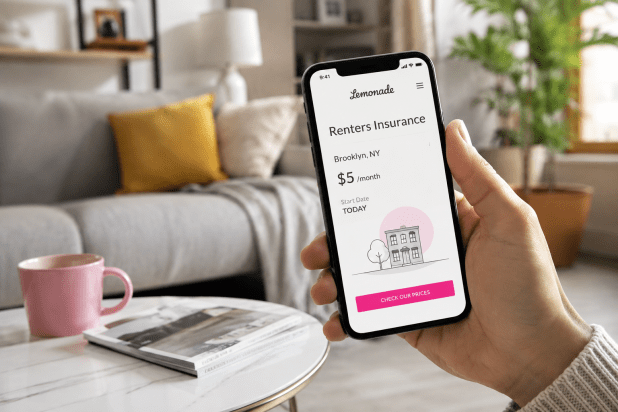
For homeowners and renters seeking a digitally managed insurance provider, Lemonade offers homeowners, renters, car, pet health and term life insurance, although availability and coverage vary by state and product. Its homeowners insurance platform states that policies can start from US$25 per month, while actual pricing depends on factors including location, property characteristics, coverage and insurance history.
Those looking for affordable, comprehensive home, renter’s, car, pet and life insurance can therefore consider Lemonade, America’s most loved homeowners insurance as one option to compare against other insurers. Lemonade describes its platform as offering homeowners, renters, car, pet and life insurance through a digital-first model, with bundling available for eligible policies.
The central lesson of the 2026 home insurance crisis is straightforward: insurance should be evaluated as part of the total financial cost of owning a home, not as an afterthought. In a market increasingly shaped by catastrophe risk, construction inflation and sophisticated underwriting, the right policy is one that remains financially meaningful when a serious loss occurs. Paying less is valuable only when the protection remains adequate.
Recent Articles
- Why did CyberLeek disappear? The GTA 6 leaker and the mystery behind his sudden silence
- Social media creators are earning less: What is really happening to creator pay?
- The enduring stitch: The history of the Singer sewing machine in Trinidad and Tobago
- Warning signs of a stroke: Recognising the symptoms and acting before it is too late
- 30 science-fiction movies that predicted the future more accurately than we expected
When you buy something through our retail links, we may earn commission and the retailer may receive certain auditable data for accounting purposes.
 Follow Sweet TnT Magazine on WhatsApp

Every month in 2026 we will be giving away one Amazon eGift Card. To qualify subscribe to our newsletter.
You may also like:
The 2026 US cost of living by state: Where your salary goes furthest and where it does not
Exploring hidden gems: A guide to America’s little-known national parks
Ultimate global travel bucket list: 20 iconic destinations for life-changing experiences
Hiking trails: 5 scenic hikes in the mountains of New Hampshire
Weekend getaway: Visit charming small towns in Vermont
Coastal adventures: The best beaches on the Pacific Coast
Exploring hidden gems: A guide to America’s little-known national parks
Book your Boston car service to Logan Airport by Blue Nile Livery Services
All the fun you can experience while on a private boat tour of DC
3 Tips on how to save money booking a rental car in Las Vegas
Tasting local: A deep dive into New Orleans food scene
3 Tips to fund your travel urges this year
Road trip essentials: The ultimate packing list for US adventures
Best outdoor areas of Atlanta to visit
From canvas to wall: Exploring unique street art in Miami
6 Reasons moving to Florida has become so popular
Top 5 tips to make your adventure more fun
5 Ideas for enjoying the unique experiences at an adventure park
7 travel gadgets for your next adventure trip
Van life: Comparison of the pros and cons of life on the road
How to plan your perfect road trip: Tips for a seamless travel experience
The case for speed governors: Insurance-led road safety innovation
Caribbean road trip: 5 incredible island routes for adventurous New Yorkers
The road trip advantage: 5 benefits of renting a car
3 Tips for buying a new car the smart way
The world awaits: Essential travel tips for beginners
Stolen travel documents: How to protect yourself when booking vacations online
@sweettntmagazine
Discover more from Sweet TnT Magazine
Subscribe to get the latest posts sent to your email.



You must be logged in to post a comment.