 Sweet TnT Magazine Trinidad and Tobago Culture


Related Articles


Selecting a high-quality smartphone requires evaluating hardware specifications beyond marketing figures to ensure the device meets specific functional needs. This article examines the critical technical components that dictate performance, including image sensor dimensions, processor architecture, and memory management.
It provides a structured approach for consumers to move past megapixel counts and focus on sensor quality, central processing unit efficiency, and internal storage limitations. Readers will find a comprehensive guide to understanding how chipset optimisation affects battery longevity and why internal storage often outperforms expandable options in modern handsets.
By addressing these core metrics, the text empowers users to make informed purchasing decisions that remain relevant across varied lifestyle activities from social events to outdoor excursions.
Key Takeaways
- Image sensor quality and physical size determine photographic excellence more effectively than high megapixel counts.
- Processor speed and system responsiveness rely on a high number of cores and gigahertz frequency combined with sufficient RAM.
- Internal storage capacity is often restricted by operating system requirements and does not always equal usable app space.
- Battery performance is a result of screen resolution and software optimisation rather than just millampere-hour ratings.
- Modern smartphones increasingly omit expandable storage slots to achieve faster data processing speeds through integrated internal memory.
Essential guide to choosing your next cellphone
By Kielon Hilaire. For some reason, many people come to me for advice about cellphones. I’m not sure if it’s because they heard I studied IT, if they think I’m working at a cellphone company or if they know how much I like to learn about different hardware and software technologies.
I believe it’s because someone told someone that I once helped her purchase a new cellphone. That second someone told another someone and the telling just continued. So time has passed and now I am here sharing my knowledge and experiences with others.
So, a friend messaged me recently to say, “Hey man, what’s a good cellphone to buy for Carnival?” At first I was frowning and mentally repeating the words, “good cellphone to buy for Carnival” with a question mark added to that. So I was about to respond when I “saw him typing” and I waited patiently. Then he said, “I want a cellphone with a good camera, all those fancy messaging apps, one that could hold plenty songs, and that is really fast.”

AGM Glory G1S | Top Thermal Camera Resolution: 256 x 192 Frame Rate: 25 FPS | 5G Qualcomm Rugged Smartphone
- Best Thermal Imagers among all Phones
- 5G Ultra Fast Snapdragon 480
- Sony 48MP Main Camera
- IP68/IP69K/MIL-STD-810H
- Support Dock Charging
US$699.00
Cellphone camera
It had been considered that cellphones with a higher number of megapixels always had the best cameras. What’s funny is that many people don’t even know what a megapixel is, yet they believe that having more of it is better thanks to years of shameless marketing.
The truth is that the size and quality of the image sensor is much more important. As a rule of thumb, the larger the sensor the larger pixels can be, and the larger the pixels the more light can be collected when a photo is taken, which helps improve photo quality.
Cellphone processor
You also need to know the strength of a phone’s CPU as this determines how quickly it can render images to further enhance quality, which brings up the question about speed. To keep this simple, more cores and higher GHz generally means faster speeds. Additionally, you would want to get a phone with the largest and fastest RAM that your money can get.
Storage is another important factor that many people overlook. It’s like buying a sport car as your primary vehicle, only to realise after that there are no extra seats and little trunk space for your most practical needs.

moto g pure
ULTRA-WIDE DISPLAY.
2-DAY BATTERY
Color Deep Indigo
Internal Storage 32GB
Unlocked
Was US$159.99 Now US$139.99
Cellphone memory
Many phones nowadays come with non-expandable memory, which means that if you buy the phone and you run out of space then you may either have to delete some vital stuff or you’re out of luck. If you’re not sure how much space you will need, use the following as a guide: less than 16Gb for low storage, 16Gb-32Gb for average storage and 64Gb or more if you plan to store everything and the kitchen sink.
It is also worth mentioning that many phones are still limited to using only a fraction of your internal storage to run apps, which means that you can have a phone with internal storage of 16Gb and only 2Gb of that might actually be capable of being used for several apps. This capacity increases in proportion to the amount of internal storage the phone comes with.
Additionally, while it is a plus if a phone can facilitate expandable storage keep in mind that more and more phones are forsaking this in favour of pure internal storage because it generally allows phones to conduct faster processing.
Cellphone battery
Among the other “minor” things that are often overlooked when choosing a good phone is battery life. The more feature-laden a smart phone, the more power is consistently required by the phone’s CPU and the shorter the battery life.
Choosing a cellphone that will last is based on a combination of factors. Namely the size of the screen, the screen’s resolution, the power consumption of the phone’s processor. The type of chipset used, and how proprietary software is optimised with the phone’s hardware components.
Furthermore, if battery life is of more concern for you than the average user, then the best alternative would be to get a phone that contains a user-replaceable battery, which would allow you to swap batteries on the go.
Of course there are other factors that help make a phone good, including sound quality, graphics processor, operating system, look and feel and the quality of the front-facing (selfie) camera, but what’s mentioned in the core of this article should be your primary concerns.
Once you choose a phone based on the above mentioned factors you can rest assure that whether you decide to play mas, fete, party, go hiking, visit the beach or take a trip down the islands your phone will help you keep the positive vibes and stay lively throughout and beyond the Carnival season.
February 2016 – Issue 20 www.sweettntmagazine.com
Technical considerations for smartphone selection
When evaluating a new handset, the camera remains a primary selling point. While marketing often emphasises megapixels, the physical dimensions of the image sensor are the true determinant of photo quality. Larger sensors possess larger pixels, which capture more light and produce superior images in diverse lighting conditions. The central processing unit (CPU) serves as the engine of the device, where a higher count of cores and greater clock speeds in GHz facilitate faster image rendering and multitasking.
Memory is divided into RAM, which handles active processes, and internal storage for data retention. It is important to note that a portion of internal storage is reserved for the system, meaning a 16GB device may only offer a fraction of that for user applications. While expandable storage via microSD cards was once standard, many manufacturers now prefer fixed internal storage to maintain high-speed data access and overall system stability.
Battery longevity is not solely dependent on the battery size. High-resolution screens and intensive processors consume power rapidly. Optimal battery life is achieved when the chipset and proprietary software are tuned for efficiency. For users with extreme power requirements, devices with user-replaceable batteries offer the utility of swapping power cells during extended use, though this feature has become less common in flagship models.
FAQ
What is more important than megapixels in a phone camera? The size and quality of the image sensor are more critical as they dictate how much light the camera can capture.
Why is internal storage better than expandable memory? Internal storage allows for faster data processing and improved system performance compared to external cards.
How does the processor affect phone speed? A processor with more cores and higher GHz frequencies can handle complex tasks and render graphics more efficiently.
Why does battery life vary between similar phones? Battery life depends on screen resolution, processor efficiency, and how well the software is optimised for the hardware.
Is 16GB of storage enough for a modern smartphone? 16GB is considered low storage today, especially as system files occupy a significant portion of that space.
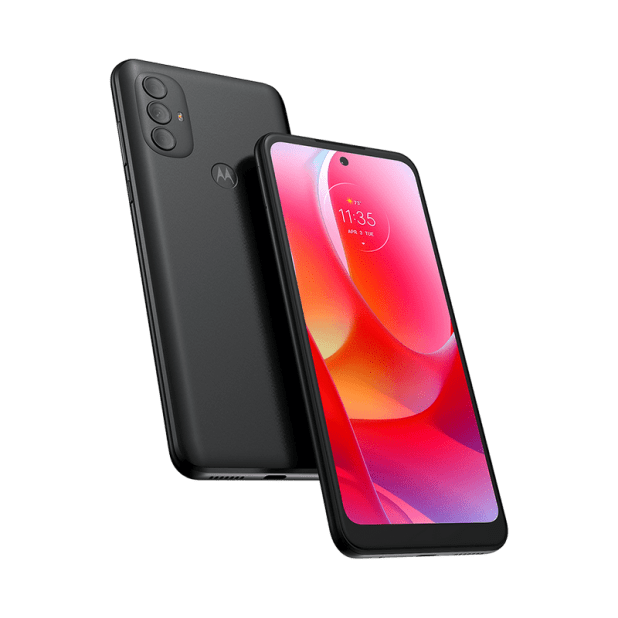
moto g power (2022)
UP TO 3-DAY BATTERY
ENDLESS POSSIBILITIES.
Color Dark Grove or Ice Blue
Internal Storage 64GB or 128GB
Unlocked
Was US$199.99

Apple iPhone 17 Pro Max
Available in 256GB, 512GB, 1TB, 2TB
When you buy something through our retail links, we may earn commission and the retailer may receive certain auditable data for accounting purposes.
You may also like:
Increasing your phone’s battery life
How to prepare for a blackout or power outage
Slow PC? Tips you can use to speed things up
Samsung Galaxy S22 Series Launch Promotions
How does digital wallets work?
Video editing tips: Boost your professional career
SingSing App to become a musical SocialFi platform
Streams mobile app: Easy way to lend your digital assets
Ransomware attacks on healthcare organisations increased 94% – survey

Samsung Galaxy S22 Ultra 5G – (Factory Unlocked) Buy Now
Samsung Galaxy S22+ 5G – (Factory Unlocked) Buy Now
Samsung Galaxy S22 5G – (Factory Unlocked) Buy Now
Discover more from Sweet TnT Magazine
Subscribe to get the latest posts sent to your email.



You must be logged in to post a comment.