 Sweet TnT Magazine Trinidad and Tobago Culture



Related Articles


EV fast-charging has reached a breakthrough with BYD’s Lightning charging stations, enabling electric vehicles to recharge in minutes rather than hours. This development directly addresses one of the most persistent barriers to EV adoption: charging time.
With second-generation blade battery technology and ultra-high-power delivery systems, BYD is closing the gap between internal combustion refuelling and electric charging. The implications are significant for global energy consumption, urban infrastructure and consumer behaviour.
This article explains the engineering behind BYD’s fast-charging ecosystem, the scientific advances enabling rapid energy transfer, and how this innovation reshapes EV ownership economics amid rising fuel prices.
It also examines infrastructure scalability, battery longevity considerations and global adoption prospects. The analysis is grounded in current EV technology frameworks and charging standards.
Key Takeaways
- EV fast-charging reduces recharge time to minutes, approaching petrol refuelling parity.
- BYD’s blade battery improves thermal stability and high-rate charging capability.
- Ultra-fast charging infrastructure depends on grid capacity and cooling systems.
- Shorter charging times significantly enhance EV adoption and usability.
- Rising fuel prices accelerate the economic case for electric vehicles.
The evolution of EV fast-charging
Electric vehicles have historically faced a fundamental constraint: energy density versus charging speed. Lithium-ion batteries, the dominant chemistry in EVs, require careful charge management to avoid overheating, lithium plating and long-term degradation. Early EV charging systems operated at relatively low power levels, typically between 3 kW and 50 kW, resulting in charging times measured in hours.
The emergence of high-power DC fast-charging marked a turning point. Systems delivering 150 kW to 350 kW reduced charging times significantly, enabling partial charges within 20 to 40 minutes. However, this still lagged behind the five-minute refuelling benchmark of petrol vehicles. The industry challenge has been to safely increase charging power without compromising battery integrity.
BYD’s Lightning charging system represents a step change in this trajectory. By integrating advanced battery chemistry, thermal management and high-voltage architecture, the company has demonstrated charging times approaching those of conventional fuel systems.
BYD’s second-generation blade battery: Engineering fundamentals
At the core of this innovation lies BYD’s second-generation blade battery. Unlike traditional cylindrical or pouch cells, blade batteries use elongated prismatic cells arranged in a structural configuration. This design improves volumetric efficiency and enhances heat dissipation.
The chemistry typically relies on lithium iron phosphate (LFP), which offers several advantages over nickel-based chemistries. LFP batteries exhibit greater thermal stability, lower risk of thermal runaway and longer cycle life. Historically, LFP has been limited by lower energy density, but structural innovations have mitigated this constraint.
The second-generation blade battery introduces improvements in ionic conductivity and electrode architecture, allowing higher charge acceptance rates. This is critical for EV fast-charging, as rapid charging requires the battery to absorb large currents without forming metallic lithium deposits, which can degrade performance and safety.
Thermal management is equally important. Fast charging generates significant heat due to resistive losses. BYD’s system incorporates advanced cooling channels and materials to maintain optimal operating temperatures, ensuring both performance and longevity.
The Lightning charging station: Infrastructure redesign
The Lightning charging station is not merely a higher-powered charger. It represents a rethinking of user interaction, mechanical design and power delivery.
Traditional EV chargers often feature heavy cables resting on the ground, which can be cumbersome and prone to wear. BYD’s system uses a suspended cable design, where the cable is mounted overhead and remains clean and lightweight. This improves ergonomics and reduces maintenance requirements.
From an electrical standpoint, the station operates at ultra-high power levels, potentially exceeding 1 MW in peak delivery. Such power levels require high-voltage architectures, typically around 800V or higher, to reduce current and minimise resistive losses.
The charging interface is designed for ease of use, allowing one-handed operation. This may appear trivial, but usability plays a crucial role in consumer adoption. Simplifying the charging process makes EV ownership more comparable to conventional refuelling.
Charging performance: Approaching petrol parity
One of the most striking claims associated with BYD’s system is the ability to charge from approximately 10% to near full capacity in under ten minutes. In some demonstrations, partial charges equivalent to hundreds of kilometres of range are achieved in around five minutes.
To contextualise this, consider a vehicle with a 710 km range. Achieving a substantial portion of that range within minutes fundamentally alters the user experience. Charging becomes a brief stop rather than a planned activity.
This performance is enabled by a combination of factors: high charging power, battery chemistry optimised for rapid ion transport and precise charge control algorithms. These algorithms dynamically adjust current and voltage to maximise speed while preventing damage.
From a scientific perspective, the limiting factors in fast charging include diffusion rates within the electrode materials and heat generation. BYD’s advancements suggest improvements in both domains, enabling higher C-rates without compromising safety.

JuiceBox 40
- Up to 7x faster charge: 40A / 9.6 kW
- WiFi connectivity with smartphone app and online control dashboard
- Dynamic LED lights show power, connectivity, and charging status
- *NEW* built-in cable rack
- *NEW* security lock

Was US$699.00 Now US$649.00 Ships free!
The economics of EV fast-charging in a high fuel price environment
Rising fuel prices have intensified interest in electric mobility. Petrol and diesel costs are subject to geopolitical factors, supply constraints and refining capacity. In contrast, electricity can be generated from diverse sources, including renewables.
EV fast-charging enhances the economic case for electric vehicles by reducing the time cost associated with charging. Time is a critical component of total cost of ownership, particularly for commercial fleets and high-utilisation vehicles.
With ultra-fast charging, EVs can achieve utilisation rates comparable to internal combustion vehicles. This is particularly relevant for ride-hailing services, logistics and public transport systems.
Furthermore, electricity prices are generally more stable than fuel prices. Even when using high-power charging stations, the cost per kilometre remains lower than petrol in most markets. This differential becomes more pronounced as fuel prices rise.
Grid infrastructure and energy demand
The deployment of ultra-fast charging stations introduces new challenges for electrical grids. Delivering megawatt-level power requires robust grid connections, transformer capacity and energy management systems.
Peak demand can be significant, particularly in urban areas with high EV adoption. To address this, charging networks may incorporate energy storage systems, such as stationary batteries, to buffer demand and reduce grid strain.
Smart charging algorithms can also distribute load, scheduling charging sessions to avoid peak periods. Integration with renewable energy sources further enhances sustainability, allowing EVs to be powered by solar or wind generation.
From a systems engineering perspective, the success of EV fast-charging depends not only on vehicle technology but also on grid modernisation and infrastructure investment.

Induction electric ac motor
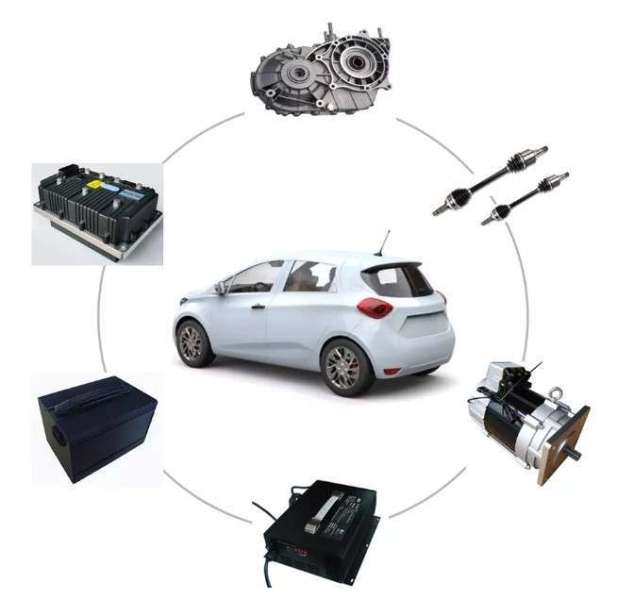
EV car conversion kits for converting gas petrol to electric
- AC driving system (1kw-20kw): AC motor and controller
- Transmission assembly: rear axle, front live shaft, reducer and rear/front drive assembly
- Power supply system: battery charger and Lithium battery
- Other components: DC-DC converter, dashboard, pedal, encoder and brake
US$610.16 (TT$4,191.79)
Battery longevity and safety considerations
A common concern with fast charging is its impact on battery life. High charging rates can accelerate degradation if not properly managed. However, advancements in battery chemistry and thermal control are mitigating these effects.
LFP batteries, such as those used in BYD’s blade design, are inherently more resilient to high charging rates. They exhibit lower degradation under repeated fast-charging cycles compared to nickel-rich chemistries.
Additionally, modern battery management systems monitor temperature, voltage and current in real time, adjusting charging parameters to optimise longevity. This ensures that ultra-fast charging does not significantly reduce battery lifespan.
Safety remains a priority. The structural design of blade batteries enhances resistance to physical damage and reduces the risk of thermal runaway. Combined with advanced cooling systems, this provides a robust safety profile.
User experience and adoption dynamics
The transition from petrol vehicles to EVs has been influenced by convenience as much as cost. Charging time has been a psychological barrier, even when practical requirements are met.
By reducing charging time to minutes, EV fast-charging addresses this barrier directly. The experience becomes familiar and predictable, aligning with existing refuelling habits.
The design of charging stations also plays a role. Clean, lightweight cables and intuitive interfaces contribute to a positive user experience. These factors, while often overlooked, are critical for widespread adoption.
As charging infrastructure expands, range anxiety diminishes. Drivers gain confidence in the availability and speed of charging, further accelerating the transition to electric mobility.

Traction motor for electric vehicle ac motor EV conversion kit R45-120
US$6,557.00 (TT$44,478.44)
Global implications for the automotive industry
The introduction of ultra-fast charging technology has implications beyond individual consumers. It influences vehicle design, manufacturing strategies and competitive dynamics within the automotive industry.
Manufacturers must develop vehicles capable of handling high charging power, including appropriate battery systems and electrical architectures. This may lead to standardisation around high-voltage platforms.
Charging infrastructure providers must invest in high-capacity networks, potentially partnering with governments and energy companies. Regulatory frameworks may evolve to support these developments.
The competitive landscape is also affected. Companies that can deliver both advanced vehicles and supporting infrastructure gain a strategic advantage. BYD’s integrated approach, combining battery technology, vehicles and charging systems, positions it strongly in this context.
Environmental considerations
EV fast-charging contributes to environmental sustainability by facilitating the transition away from fossil fuels. However, the environmental impact depends on the source of electricity.
In regions with a high share of renewable energy, EVs significantly reduce greenhouse gas emissions. Even in fossil fuel-based grids, EVs can be more efficient than internal combustion engines.
The production and disposal of batteries remain important considerations. Advances in recycling and material recovery are addressing these challenges, improving the overall lifecycle sustainability of EVs.
Fast-charging infrastructure can also support renewable energy integration. By aligning charging demand with periods of high renewable generation, EVs can act as a flexible load within the energy system.
Elmotorn EV Conversion Kit
Output Power
10kW 72V front wheel drive motor TT$3,261.41/US$480.00
10kW 72V front wheel drive motor & controller TT$6,522.82/US$960.00
10kW 72V rear wheel drive motor TT$3,261.41/US$480.00
10kW 72V rear wheel drive motor & controller TT$6,522.82/US$960.00
10kW 96V front wheel drive motor TT$3,737.03/US$550.00
10kW 96V front wheel drive motor & controller TT$7,609.96/US$1,120.00
The future of EV fast-charging
The trajectory of EV fast-charging suggests continued improvements in speed, efficiency and accessibility. Research is ongoing into solid-state batteries, which could further enhance energy density and charging performance.
Wireless charging and automated charging systems may also play a role, particularly in commercial applications. These technologies aim to reduce user intervention and improve convenience.
Standardisation will be critical for global adoption. Interoperability between vehicles and charging networks ensures that users can access charging infrastructure regardless of brand or location.
As technology advances, the distinction between refuelling and charging will continue to diminish. The goal is a seamless energy replenishment experience, integrated into daily life.
A turning point for electric mobility
BYD’s Lightning charging stations represent a significant milestone in the evolution of EV fast-charging. By achieving charging times comparable to petrol refuelling, the company addresses a key barrier to adoption.
The combination of advanced battery technology, high-power infrastructure and user-centric design creates a compelling value proposition for consumers and businesses alike. As fuel prices rise and environmental concerns intensify, the shift towards electric mobility is likely to accelerate.
The broader impact extends to energy systems, urban planning and global markets. EV fast-charging is not merely a technological advancement; it is a catalyst for systemic change in how energy is consumed and transported.
For drivers, the implication is clear: owning an electric vehicle is becoming not only economically viable but also operationally convenient. The era of rapid, accessible and efficient EV charging has arrived.
 Follow Sweet TnT Magazine on WhatsApp

Every month in 2026 we will be giving away one Amazon eGift Card. To qualify subscribe to our newsletter.
When you buy something through our retail links, we may earn commission and the retailer may receive certain auditable data for accounting purposes.
Recent Articles
- Beach-ready body: A medically grounded guide to healthy diet and exercise for summer
- How to buy SpaceX stock: What the IPO leak reveals and how to act strategically
- EV fast-charging: How BYD’s Lightning charging stations are redefining electric mobility
- CoinJoins: How Bitcoin privacy works, risks, and legal realities
- Exploring the Main Ridge Forest Reserve: Tobago’s ancient rainforest
You may also like:
New generator by Honda Power Sports & Products is more convenient, powerful
Off Grid Solar Power System: Cut your electric bill now
Solar energy: Save up to 100% on utility bills with RESSCOTT LTD
Great reasons to invest in your own golf cart
How to prepare for a blackout or power outage
BLUETTI AC500: How to survive a blackout
A quick guide to choosing the best home insulation
Home automation global market to generate USD 210.15 billion by 2030 – report
Energy efficient lighting market size to grow by USD 71.7 billion
Microchip builds inductive position sensors for EV motor control applications
New generator by Honda Power Sports & Products is more convenient, powerful
@sweettntmagazine
Discover more from Sweet TnT Magazine
Subscribe to get the latest posts sent to your email.



You must be logged in to post a comment.