 Sweet TnT Magazine Trinidad and Tobago Culture



Related Articles


The making of Macallen: From ordinary distillery to global obsession
To understand Macallen as a brand, you have to begin by stripping away the reverence. The real story does not start with luxury, prestige, or cult devotion. It starts in 1824 in the Scottish Highlands, at a time when distilling was being legalised rather than mythologised.
Macallen emerged in Speyside as one of hundreds of small operations producing malt whisky in broadly similar ways, using similar barley, similar water sources, and similar equipment. For more than a century, Macallen was unremarkable. It was not leading innovation, defining flavour profiles, or commanding premium prices. It existed, quietly and competently, as a farm distillery producing spirit that blended into the wider Scottish whisky ecosystem.
That long period of ordinariness is essential to understanding Macallen’s later success. Unlike many luxury brands that are rooted in genuine technical or material advantage, Macallen’s ascent was not driven by a sudden leap in product quality. It was driven by a strategic decision, beginning in the mid twentieth century, to stop competing on what was in the bottle and start competing on what was in the buyer’s mind. This shift transformed Macallen from a decent Speyside whisky into one of the most valuable spirits brands on the planet.
.png&w=750&q=75 "Macallen: A masterclass in marketing disguised as whisky history 5")
The crucial marketing pivot of the 1960s
The 1960s marked a turning point. At a time when Macallen was financially unremarkable and strategically vulnerable, a new generation of marketing leadership reframed the brand’s future around a simple but radical insight. Luxury does not live in production cost or even sensory experience. Luxury lives in narrative, symbolism, and scarcity.
While other distilleries focused on taste notes, yield efficiency, and distribution, Macallen began to invest in story. The whisky itself remained broadly consistent with its peers, but the way it was presented, discussed, and contextualised changed dramatically. This was not accidental branding. It was an early and sophisticated understanding of what modern marketing would later formalise as perception economics.
By positioning Macallen as something to be understood rather than consumed, the company laid the groundwork for a brand that could command margins unheard of in traditional spirits manufacturing.
Inventing scarcity where none existed
One of Macallen’s most decisive moves came in 1968 with the launch of its Fine and Rare Collection. At a technical level, nothing new was created. Old whisky had been sitting in warehouses across Scotland for decades. What Macallen did was reframe aged stock as cultural artefact.
By selectively releasing vintages from years such as 1926, 1946, and 1950, and by doing so in extremely limited quantities, Macallen created artificial scarcity. Whisky that had once been a storage liability became an investment-grade asset. The production cost of these bottles was negligible in modern terms, yet the perceived value soared once the narrative shifted from drink to collectible.
This tactic mirrors strategies seen in art markets and luxury watches. Restrict supply, elevate context, and allow secondary markets to validate price. A bottle that might have cost the modern equivalent of $10 to produce could now sell for over US$1.5 million at auction. The liquid did not change. The story did.
Heritage as a curated illusion
Macallen’s marketing leans heavily on heritage, and with good reason. Heritage is persuasive, emotionally resonant, and difficult to fact check in everyday consumption contexts. The brand emphasises its 1824 founding date as if it were uniquely significant, despite the fact that many distilleries share similar origins due to the Excise Act of that year.
What is omitted is just as important as what is highlighted. Macallen spent decades as a contract distiller and bulk supplier, with little individual identity. These periods are quietly reframed as years of refinement or conveniently glossed over. This is not historical accuracy. It is historical curation.
In marketing terms, Macallen demonstrates how history can be edited without being falsified. By controlling emphasis rather than facts, the brand constructs a continuous narrative of prestige that feels inevitable, even though it is relatively recent.
Selling craft while scaling industry
One of the most striking contradictions in the Macallen story is the gap between production reality and brand imagery. Modern Macallen produces over 11 million litres of spirit per year using highly efficient, industrialised processes. Fermentation is computer-controlled. Output is optimised. Scale is enormous.
Yet none of this appears in the brand’s public-facing storytelling. Instead, marketing materials focus on copper pot stills, hand-crafted casks, and solitary figures inspecting barrels by low light. The distillery itself, rebuilt in 2018 at a cost of approximately US$175 million, is buried into the landscape and visually stunning, but rarely shown in full. The old Victorian buildings remain the dominant visual shorthand.
This is not deception. It is selective romance. Luxury brands do not sell factories. They sell fantasies of craft.
Cost theatre and the price illusion
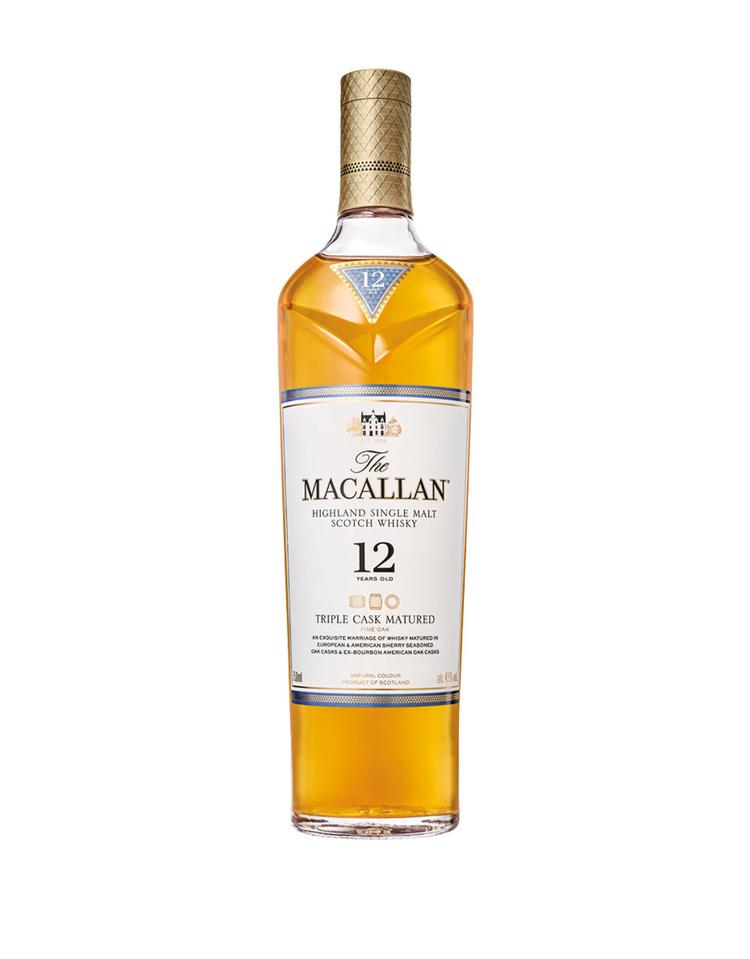
Macallen frequently justifies its pricing through emphasis on Spanish sherry casks, which are indeed more expensive than American oak. These costs are real but marginal relative to retail price. A standard bottle of Macallen 12 costs between $8 and $15 to produce, including whisky, bottling, and basic packaging. Yet it retails globally for prices that often exceed US$90.
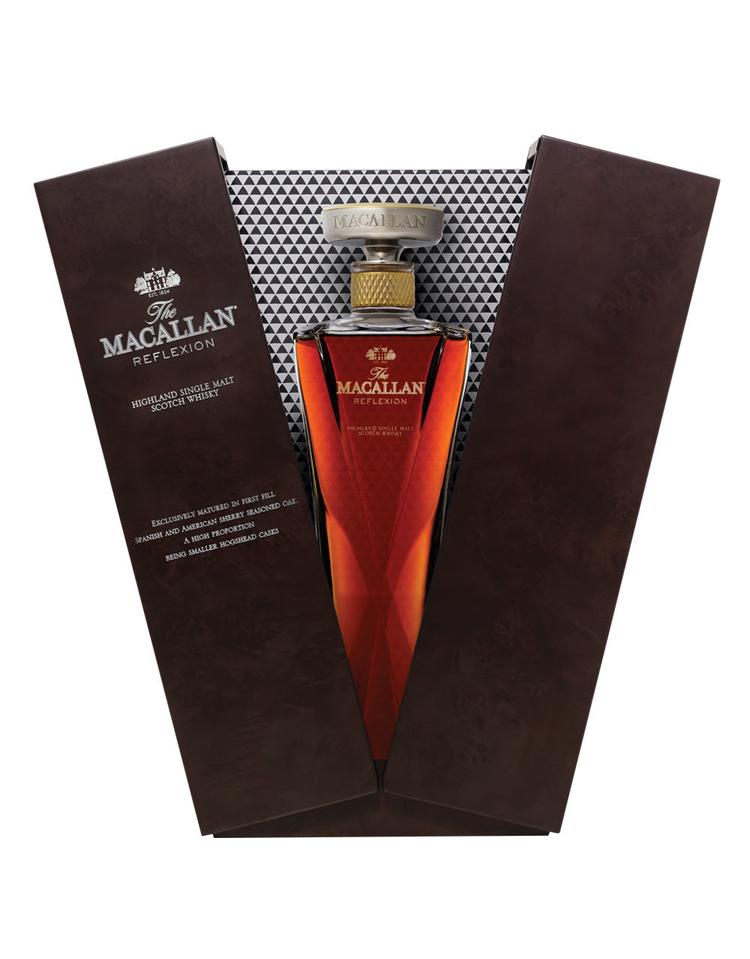
The additional value is not in liquid quality alone. It is in what can be described as cost theatre. Expensive sounding inputs are foregrounded while margins are obscured. Heavy bottles, elaborate boxes, and tactile materials reinforce the perception of value at the point of purchase. The consumer feels expense before tasting anything.
This approach works because many buyers equate price with quality, particularly in cultures where status signalling is subtle but deeply ingrained.
Building a cult, not a customer base
Macallen does not rely heavily on conventional advertising. Instead, it invests in community structures that turn customers into advocates. Private tastings, invitation-only societies, exclusive distillery access, and limited releases all create emotional investment.
Once a consumer has paid several hundred US dollars for a bottle, they are psychologically motivated to defend that purchase. Cognitive dissonance ensures they become promoters, often unpaid, but highly convincing. This is far more effective than advertising because belief feels authentic when it is self-generated.
In this sense, Macallen behaves less like a beverage company and more like a belief system.
Association as a shortcut to luxury
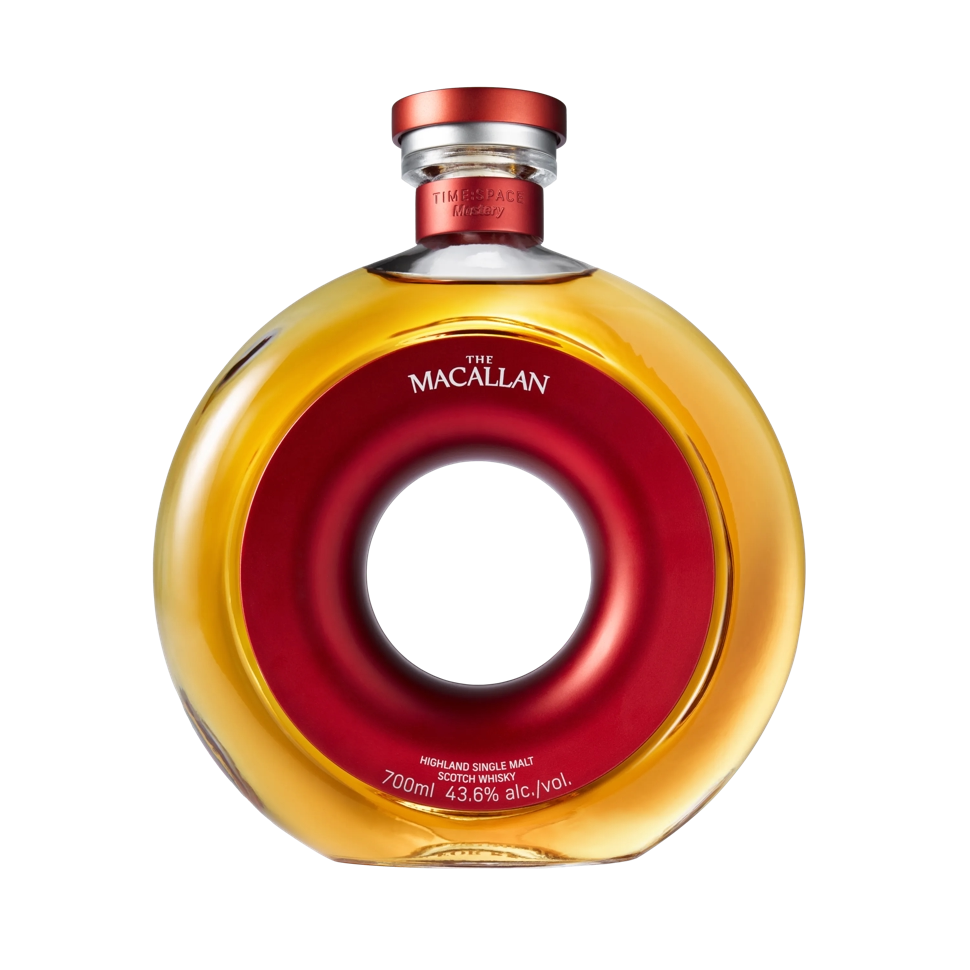
Another defining strategy has been Macallen’s deliberate shift away from whisky media towards lifestyle platforms. By aligning with luxury cars, five-star hotels, fine dining, and crystal decanter manufacturers, the brand repositioned itself away from competitors and towards champagne, fine wine, and high jewellery.
Association is one of the most powerful tools in marketing. When a brand appears alongside Bentley, Michelin-starred chefs, or bespoke crystal, it inherits the cultural capital of those categories. The product does not need to outperform its peers. It only needs to belong in a more exclusive mental category.
This repositioning allowed Macallen to escape price comparisons with other Speyside malts and instead compete in an entirely different psychological market.
Complexity as a sales strategy
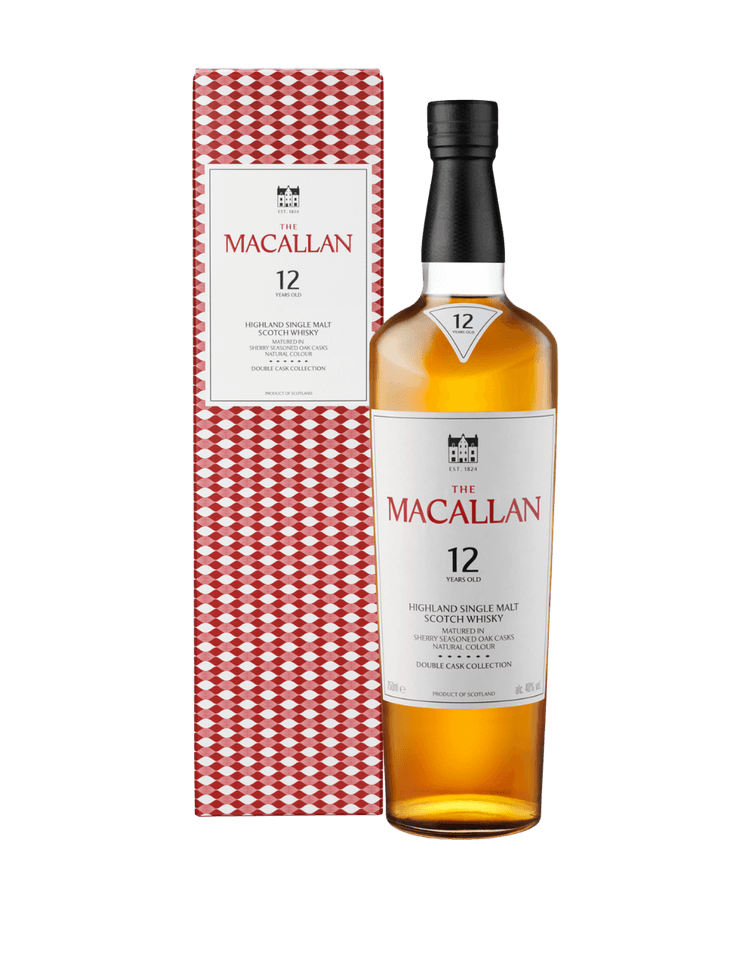
Walk into any retailer and the Macallen range appears extensive and confusing. Multiple age statements, cask finishes, and limited editions create the impression of depth and expertise. In reality, much of this variety originates from the same core stock, differentiated by maturation time or finishing processes.
Confusion works because it encourages research, consultation, and perceived sophistication. Effort creates attachment. When consumers feel they have studied a product, they value it more, even if the differences are subtle or imperceptible in blind tasting.
Macallen understands that complexity signals seriousness, even when it adds little functional difference.
Global expansion and the Asian luxury boom
Macallen’s explosive growth in the 2000s was fuelled by emerging wealth in Asia, particularly China. In markets with limited whisky tradition, age statements became proxies for quality. Macallen capitalised by releasing extremely old expressions at extraordinary prices.
From a sensory perspective, very old whisky often declines. From a status perspective, age equals prestige. Macallen sold not flavour, but face. In doing so, it unlocked margins that transformed the brand into a billion-dollar enterprise.
The lesson behind the liquid
The ultimate truth about Macallen is not that the whisky is bad. It is that the whisky is secondary. Blind tastings consistently show that similarly aged Speyside malts perform comparably. What Macallen sells is aspiration, identity, and reassurance.
Pouring a glass of Macallen is a performance. It signals taste, success, and cultural alignment. The liquid enables the ritual, but the ritual is the product.
Why Macallen matters beyond whisky
From a marketing perspective, Macallen is a case study in narrative dominance. It demonstrates how brands can manufacture scarcity, curate history, control education, and monetise identity. It shows how perception can outweigh production and how belief can be more valuable than quality.
Macallen did not change whisky. It changed what whisky means. In doing so, it built a global luxury brand not by making something rare, but by making something feel rare. That is the real masterclass, and it extends far beyond the glass.
______________________
 Follow Sweet TnT Magazine on WhatsApp

Every month in 2026 we will be giving away one Amazon eGift Card. To qualify subscribe to our newsletter.
When you buy something through our retail links, we may earn commission and the retailer may receive certain auditable data for accounting purposes.
Recent Articles
- Rain fly: The science behind nature’s post-rain swarms
- The ultimate naturalist’s itinerary for Trinidad and Tobago summer
- Men’s health: The systemic neglect of male mental wellbeing
- Home ownership: The overlooked driver of declining birth rates in Trinidad and Tobago
- 10 Ways you might see the end of the world within your lifetime
Every month in 2026 we will be giving away one Amazon eGift Card. To qualify subscribe to our newsletter.
When you buy something through our retail links, we may earn commission and the retailer may receive certain auditable data for accounting purposes.
Recent Articles
- Rain fly: The science behind nature’s post-rain swarms
- The ultimate naturalist’s itinerary for Trinidad and Tobago summer
- Men’s health: The systemic neglect of male mental wellbeing
- Home ownership: The overlooked driver of declining birth rates in Trinidad and Tobago
- 10 Ways you might see the end of the world within your lifetime
You may also like:
Advertising on social media: Why building your brand on rented land puts your future at risk
The fall of journalism: The advertising collapse no one wants to admit
Viral Facebook posts: What really happens behind the scenes
Why META is deleting millions of accounts
Media buyer guide to maximising campaign success: Why Sweet TnT Magazine is the smart choice
Advertising your business does not have to be expensive
Affordable advertising that instantly attracts more customers – read now!
How using Sponsored Articles can generate high-quality sales leads
50,000 Sales for just 2.4 cents per sale? Why smart marketers are fighting for this banner ad spot
Is Meta ads a waste of money? Here’s why Sweet TnT Magazine could be a better fit
The ultimate guide to digital advertising agencies: Why Sweet TnT Magazine is your perfect partner
Converting website traffic into sales: Mastering CTA strategies for growth and market expansion
Affordable advertising solutions for tech companies expanding globally
The problem with crime-adjacent advertising
Why the quality of internet traffic matters more than the quantity in digital advertising
Native advertising: The key to engaging your audience
Dominate the digital scene with Sweet TnT Magazine’s Banner Leaderboard
Get seen, get heard, get chosen: The power of customer reviews on Sweet TnT Magazine
Sweet engagement: Unwrapping the advantages of sponsored articles on Sweet TnT Magazine
5 Benefits of advertising on SweetTnTMagazine.com
Newsletter marketing with Sweet TnT Magazine: A long-term investment for digital media buyers
Unlock affordable, high-engagement advertising – reach over 1 million engaged readers monthly
The power of digital advertising: Drive results and outshine the competition
@sweettntmagazine
Discover more from Sweet TnT Magazine
Subscribe to get the latest posts sent to your email.



You must be logged in to post a comment.