 Sweet TnT Magazine Trinidad and Tobago Culture



Related Articles


The dry season brings welcome sunshine, calmer seas and clearer travel schedules across the Caribbean. It also brings two invisible threats that quietly invade homes and offices alike: bush fire smoke and Saharan dust.
Together, they make indoor air quality one of the most overlooked public health issues of our time. While outdoor air pollution often dominates headlines, the air inside our homes can be significantly more harmful, especially during prolonged dry spells. Understanding how to protect indoor air quality is no longer a lifestyle choice. It is a health decision with long-term consequences.
Across Trinidad and Tobago and similar tropical regions, people spend close to ninety percent of their time indoors. That means the quality of the air circulating in bedrooms, living rooms and workspaces plays a decisive role in respiratory health, cardiovascular function, sleep quality and cognitive performance.
During the dry season, when windows are closed against heat, smoke and dust, pollutants can accumulate quickly. Without active filtration, indoor air can become a concentrated mix of fine particles, allergens and chemical irritants.
The dry season and the hidden decline of indoor air quality
The dry season changes how air behaves. Lower humidity allows fine particles to remain suspended longer, increasing the amount that is inhaled with every breath. Bush fires in the Northern Range and other areas release smoke that travels kilometres from its source, seeping indoors through tiny gaps that no building can fully seal. At the same time, Saharan dust events blanket the region in mineral particles so small they are invisible yet biologically aggressive.
Fine particulate matter, especially PM2.5, is the main culprit. These particles are small enough to pass deep into the lungs and enter the bloodstream. Once there, they trigger inflammation that affects the heart, brain and immune system. During bush fires, the danger intensifies when smoke contains toxins from burning plastics, treated wood and chemical waste. Saharan dust adds another layer of risk by carrying bacteria, fungal spores and pollutants picked up during its transatlantic journey.
Closing windows helps, but it does not solve the problem. Indoor air quality often deteriorates faster than outdoor air during these events because pollutants become trapped and recirculated by fans and air conditioning systems. This is where modern air purification moves from convenience to necessity.
How poor indoor air quality affects the body
The health effects of poor indoor air quality are not limited to coughing or watery eyes. Short-term exposure can cause headaches, fatigue, poor concentration and disrupted sleep. Over time, repeated exposure to fine particles increases the risk of asthma flare-ups, chronic bronchitis and cardiovascular disease. Recent findings have highlighted delayed health impacts, where symptoms appear weeks or even months after a major smoke or dust event.
Children are especially vulnerable because their lungs are still developing, while older adults and those with pre-existing conditions face a higher risk of hospitalisation during prolonged pollution episodes. Even healthy adults can experience elevated blood pressure and heart rhythm irregularities when indoor air quality remains compromised for days at a time.
Sleep is another casualty. Polluted indoor air reduces oxygen efficiency and increases nighttime inflammation, leading to restless sleep and daytime irritability. Over weeks, this can affect productivity, mood and immune resilience.
Why air purifiers are central to indoor air quality protection
An air purifier is not a luxury appliance. It is a targeted health tool designed to remove pollutants that standard ventilation cannot handle. High-efficiency particulate air filtration is the benchmark for serious indoor air quality management. An H13 True HEPA filter captures 99.97 percent of airborne particles as small as 0.3 microns, including PM2.5, pollen, pet dander, smoke particles and many bacteria.
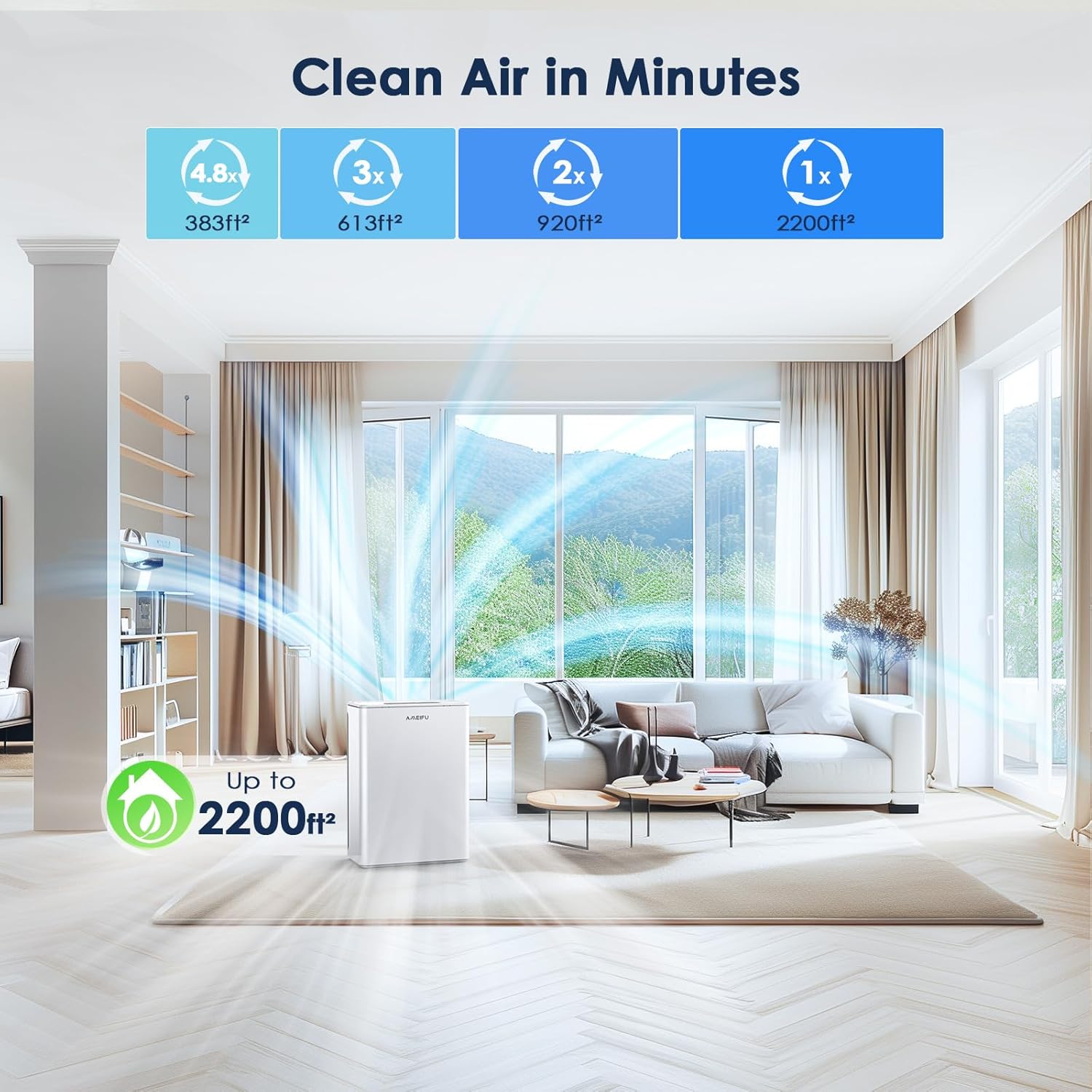
During the dry season, a properly sized air purifier can dramatically reduce indoor particle concentration within minutes. This creates a stable, clean-air environment even when outdoor conditions remain hazardous. The effect is measurable and immediate, particularly in enclosed spaces like bedrooms and home offices.
AMEIFU air purifiers and large-scale indoor air quality control
For larger homes and open-plan living spaces, capacity matters. The AMEIFU Air Purifier for home use is designed to cover areas up to 2300 square feet, making it suitable for living rooms, apartments and family homes common across the Caribbean. Its high-efficiency H13 True HEPA filter targets the full spectrum of dry-season pollutants, from bush fire smoke to Saharan dust and everyday allergens.
What distinguishes this system is its balance between power and quiet operation. On its lowest setting, noise levels remain below 15 decibels, allowing it to operate throughout the night without disrupting sleep. This is particularly important for maintaining indoor air quality continuously, as pollutant levels fluctuate throughout the day and night.
The built-in PM2.5 sensor provides real-time feedback on air cleanliness, translating invisible risks into visible information. Auto mode adjusts fan speed based on detected pollution levels, ensuring energy efficiency while maintaining protection. During sudden smoke surges or dust intrusions, the system responds immediately, reducing exposure without manual intervention.
Indoor air quality, sleep and mental wellbeing
Clean air supports deep, restorative sleep. When air is free from irritants, the body maintains stable oxygen levels and avoids inflammatory responses that interrupt rest cycles. Quiet air purifiers play a crucial role here, allowing continuous filtration without becoming a source of stress or disturbance.
Aromatherapy functionality, when used responsibly, can enhance the indoor environment by neutralising odours without masking pollution. Combined with child lock features, this ensures safe operation in family homes while preventing accidental changes that compromise air quality.
Mental clarity is another benefit often overlooked. Studies have linked improved indoor air quality with better concentration, reduced anxiety and improved mood. During the dry season, when outdoor activity may be limited, maintaining a clean indoor environment supports both physical and psychological resilience.
Bush fires, Sahara dust and the need for a clean room strategy
Experts increasingly recommend creating a designated clean room during severe pollution events. This is a space with minimal external airflow, sealed windows and a high-capacity air purifier operating continuously. Bedrooms are ideal candidates, as sleep is when the body performs critical repair processes.
Avoiding additional indoor pollution sources is essential. Frying food, burning candles and dry sweeping all release particles that counteract purification efforts. Damp cleaning and HEPA-filtered vacuuming prevent resuspension of settled dust.
Air conditioners should be set to recirculate mode, with filters maintained regularly to prevent the reservoir effect where old pollutants are reintroduced into the room. An air purifier complements these measures by capturing particles that cooling systems are not designed to handle.

Long-term benefits of investing in indoor air quality
The benefits of maintaining high indoor air quality extend beyond the dry season. Reduced allergen load lowers chronic inflammation, supporting immune health year-round. Cleaner air protects household electronics from dust accumulation and reduces odour persistence from pets, cooking and humidity-related issues.
From a financial perspective, preventative air quality management reduces medical visits, medication reliance and lost productivity due to illness. It also protects air conditioning systems from premature wear caused by clogged filters and dust-laden coils.
Certified, ozone-free air purifiers that meet international safety standards provide peace of mind, particularly in households with children, elderly relatives or pets. Regular filter replacement ensures consistent performance and sustained protection.
Indoor air quality as a public health priority
As climate patterns shift and dry seasons become more intense, indoor air quality will continue to influence public health outcomes across the Caribbean and beyond. The idea that indoor air is automatically safer than outdoor air is outdated. Without active management, it can become more polluted, more persistent and more harmful.
Air purifiers designed for large spaces, equipped with true HEPA filtration and intelligent monitoring, represent one of the most effective defences available today. They transform homes into controlled environments where clean air is not dependent on outdoor conditions.
Protecting indoor air quality during the dry season is about safeguarding the most basic human function: breathing. Clean air supports better sleep, stronger hearts, clearer minds and healthier lungs. In a world where environmental threats increasingly cross our thresholds, taking control of the air inside our homes is one of the most practical and impactful health decisions we can make.
__________________

Every month in 2026 we will be giving away one Amazon eGift Card. To qualify subscribe to our newsletter.
Recent Articles
- Why did CyberLeek disappear? The GTA 6 leaker and the mystery behind his sudden silence
- Social media creators are earning less: What is really happening to creator pay?
- The enduring stitch: The history of the Singer sewing machine in Trinidad and Tobago
- Warning signs of a stroke: Recognising the symptoms and acting before it is too late
- 30 science-fiction movies that predicted the future more accurately than we expected
When you buy something through our retail links, we may earn commission and the retailer may receive certain auditable data for accounting purposes.
You may also like:
How to furnish every room in your home with comfort, style and purpose in 2025
50-year mortgage: Why an extra two decades can cost far more than it saves
New home: Avoid 6 regretful problems before moving
Home upgrade: Ways to brighten up your house on a budget
5 Carpet cleaning myths that are costing you money
8 Affordable ways to cool your home without air conditioning
Minimalist living: How to simplify your home and life
Cash and mortgage: Legal and fiduciary considerations for home buyers
Home remodelling: A comprehensive guide to transforming your living space 2023
How to find cash home buyers near you
How to choose the right roofing for your home?
A quick guide to choosing the best home insulation
Finding success as a real estate agent
A quick guide to choosing the best home insulation
5 Best home renovation ideas you should go for
Deal with noisy neighbours in 5 peaceful ways
@sweettntmagazine
Discover more from Sweet TnT Magazine
Subscribe to get the latest posts sent to your email.



You must be logged in to post a comment.